Epordouro 'Portas do Solar' Rosé Blend 2025
A beautifully elegant and refreshing rosé from Portugal's spectacular Douro Valley, bursting with juicy raspberries, delicate floral aromas and vibrant red berry fruit. Made from three traditional Portuguese red grapes more commonly associated with powerful Douro reds and Port, this charming wine reveals a wonderfully lighter, more playful side of one of the world's most celebrated wine regions.
Epordouro Portas do Solar Rosé comes from Cima Corgo, in the heart of Portugal's historic Douro wine region, where dramatic vineyard-covered hillsides rise above the winding Douro River.
Made from Touriga Nacional, Tinta Roriz and Tinta Cão, three indigenous or long-established Portuguese red grape varieties, this beautifully expressive rosé showcases the remarkable versatility of the Douro's traditional grapes.
While these varieties are often used to produce deeply coloured, structured red wines, careful rosé winemaking allows their delicate fruit and floral characteristics to shine.
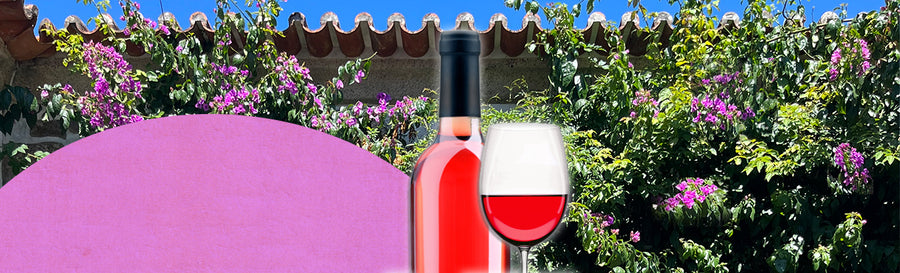
In the glass, expect a beautiful, bright pink colour with inviting aromas of fresh raspberry, strawberry and delicate flowers, accompanied by subtle red cherry notes. On the palate, it's smooth, light and wonderfully refreshing, with juicy red fruit, balanced acidity and a clean, elegant finish.
At 12.5% ABV, it's a deliciously versatile rosé, equally enjoyable as an aperitif, alongside a leisurely seafood lunch or with a selection of traditional Portuguese petiscos.
Meet the grapes behind the blend
Three traditional Douro red grapes, each bringing a distinctive personality, come together to create a beautifully balanced and refreshing rosé.
Touriga Nacional – The Aromatics and Structure
Touriga Nacional is widely regarded as one of Portugal's most prestigious indigenous red grape varieties.
Historically associated with the Douro and Dão regions, it's particularly famous for its important role in Port production.
Typical characteristics include blackberry, raspberry, violet, dark plum and delicate herbal notes, often accompanied by impressive tannin structure.
One of the grape's defining characteristics is its small berries, which have a relatively high proportion of skin to juice.
This makes Touriga Nacional particularly valuable for producing deeply coloured, structured reds.
But when used for rosé, the winemaker can limit the extraction of colour and tannin, allowing the grape's more delicate floral and red fruit characteristics to take centre stage.
In Portas do Solar, Touriga Nacional contributes expressive fruit and a lovely aromatic elegance.
Tinta Roriz – The Juicy Red Fruit
Tinta Roriz is one of the Douro's most important traditional red grapes.
And here's an interesting connection: Tinta Roriz is the Portuguese name for Tempranillo, one of Spain's most famous red grape varieties.
In southern Portugal, particularly the Alentejo, the same grape is commonly known as Aragonez.
Typical characteristics include red cherry, strawberry, raspberry and plum, sometimes accompanied by subtle spice and earthy notes.
Tinta Roriz is particularly valued for its ability to contribute fruit, body and structure to blends.
In rosé, its juicy red berry character can be especially appealing, adding freshness and an approachable, fruit-forward personality.
In this blend, Tinta Roriz contributes delicious red fruit and a lovely sense of balance.
Tinta Cão – The Freshness and Elegance
Tinta Cão is one of Portugal's most fascinating traditional red grape varieties.
Its name translates literally as "red dog" in Portuguese, although the precise origin of the name remains uncertain.
Historically grown in the Douro, Tinta Cão has long been valued for its contribution to Port blends.
It's a relatively late-ripening grape, often producing small yields, and is particularly prized for its naturally refreshing acidity and aromatic complexity.
Typical characteristics include red berries, delicate florals, spice and subtle herbal notes.
Although it isn't as widely planted as Touriga Nacional or Tinta Roriz, Tinta Cão can be an important blending partner, particularly in warm regions where preserving freshness is essential.
In Portas do Solar, it helps contribute acidity and elegance, balancing the ripe fruit of the other varieties.
Together, Touriga Nacional, Tinta Roriz and Tinta Cão create a rosé that combines fragrant red fruit, delicate florals and beautifully refreshing acidity.
How can powerful red grapes make delicate rosé?
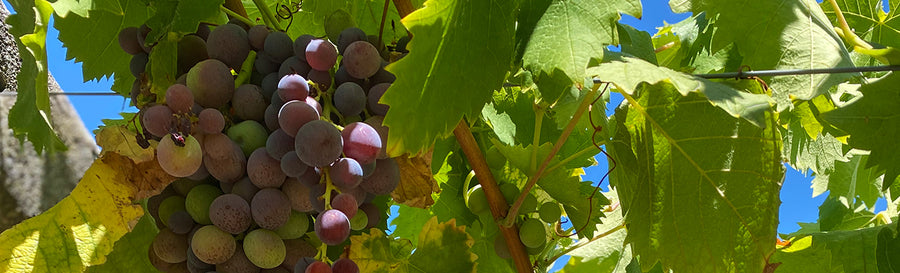
One of the most fascinating things about rosé is that the same grapes used to produce powerful, deeply coloured red wines can also create beautifully pale, refreshing pink wines.
The secret lies largely in how the grapes are handled during winemaking.
Most red grapes have clear or nearly colourless juice. Their red, purple and blue pigments are concentrated primarily in the skins.
When producing red wine, winemakers typically ferment the juice in contact with the grape skins, extracting colour, tannins and flavour.
For rosé, however, that contact is carefully limited.
The grapes may be pressed relatively quickly, or the juice may spend only a short time in contact with the skins before being separated.
This allows the winemaker to extract enough colour and flavour to create a rosé without developing the heavier tannins associated with red wine.
The result can be wonderfully surprising.
Touriga Nacional, Tinta Roriz and Tinta Cão may be famous for producing structured reds, but in rosé they reveal a completely different personality.
Their dark fruit and tannins give way to delicate berries, floral aromas and refreshing acidity.
It's a lovely reminder that the grape variety is only part of the story. How a winemaker chooses to work with it can be just as important.
The Douro isn't just about Port and red wine
When most people picture the Douro Valley, they imagine steep terraced vineyards, powerful red wines and, of course, Port.
And understandably so.
The Douro is one of the world's most historic wine regions, with a winemaking heritage stretching back centuries.
Its dramatic landscapes, hot summers and traditional grape varieties have made it internationally famous for producing concentrated, structured wines.
But the region is far more diverse than many people realise.
Alongside its famous reds and fortified wines, the Douro also produces fresh, aromatic whites, elegant rosés and sparkling wines.
Rosé is particularly interesting because it offers another way to appreciate the region's traditional red grapes.
Rather than emphasising concentration and tannin, winemakers can focus on freshness, fragrance and delicate fruit.
The result is a wine that captures the Douro's distinctive grape varieties in a wonderfully approachable style.
Portas do Solar Rosé is a lovely example, offering a lighter expression of the same winemaking heritage that has made the region famous.
What makes Cima Corgo special?
The Douro Valley is traditionally divided into three subregions: Baixo Corgo, Cima Corgo and Douro Superior.
Cima Corgo occupies the central part of the Douro and is particularly famous for its historic vineyards and outstanding Port production.
Compared with the wetter, more Atlantic-influenced Baixo Corgo to the west, Cima Corgo generally experiences warmer, drier conditions, allowing grapes to develop impressive concentration and flavour.
The landscape is dominated by steep hillsides, winding river valleys and the distinctive terraces that have made the Douro one of the world's most recognisable wine regions.
Much of the region's vineyard land is characterised by schist-derived soils, which can fracture and allow vine roots to explore deep into the rocky ground.
And while the Douro's warm climate is particularly well suited to producing rich red wines, careful grape selection and winemaking can also create beautifully refreshing rosés.
Varieties such as Tinta Cão are especially valuable because their natural acidity can help balance the ripe fruit that develops during the region's warm summers.
Portas do Solar Rosé offers a lovely expression of this balance between fruit and freshness.
A 15th-century manor and the story behind the name
The name Portas do Solar has a fascinating connection to the history of Cabêda, the village associated with Epordouro's family winemaking heritage.
The Portuguese word portas means "doors", while solar refers to a manor house or ancestral family residence.
So Portas do Solar translates as "Doors of the Manor".
The name refers to an old manor house known as Solar dos Dragos, established in the 15th century and once belonging to a noble family of winegrowers named Dragos.
The manor was closely connected to the area's historic wine production, although today only its ruins remain.
Rather than allowing that story to disappear, Epordouro has preserved its memory through the names of its wines.
The winery's Portas do Solar, Encostas do Solar and Solar dos Dragos ranges all draw inspiration from this historic connection.
It's a lovely reminder that Portuguese wine labels often tell stories about the people, buildings and landscapes that shaped a region long before the modern winery existed.
About Epordouro
Epordouro is a family-run Portuguese winery rooted in Cabêda, in the Cima Corgo subregion of the Douro Valley.
The modern winery was established in 1998 by brothers Manuel Luís and Hermínio Morais, who wanted to revive their family's ancestral connection to winemaking.
Rather than allowing that heritage to disappear, the brothers dedicated themselves to producing wines that celebrated the traditional grapes and character of the Douro.
Their wines include the Encostas do Solar, Portas do Solar and Solar dos Dragos ranges, each exploring different expressions of the region.
The names themselves preserve the memory of the historic Solar dos Dragos manor house in Cabêda, connecting the modern family business with centuries of local wine history.
Today, Epordouro produces a diverse range of wines, from refreshing whites and elegant rosés to structured reds and traditional Port wines.
The winery also produces olive oil, another important part of the Douro's agricultural heritage.
And while the Douro is one of Portugal's most internationally recognised wine regions, Epordouro represents the smaller, independent family producers who continue to preserve its traditions.
Their Portas do Solar Rosé is a particularly lovely example, showcasing three traditional Douro red grapes in a wonderfully fresh, elegant and approachable style.
It's a reminder that even the most famous wine regions can still surprise us.
Aroma: Raspberry · Strawberry · Red Cherry · Delicate Florals
Palate: Dry · Light-bodied · Juicy Red Fruit · Balanced Acidity · Smooth Texture · Clean, Refreshing Finish
Pair with: Grilled Shrimp · Seafood Rice · Grilled Salmon · Sushi · Fresh Salads · Charcuterie · Roast Chicken · Mediterranean Vegetables · Soft Cheeses
Serving Temperature: 8–10°C / 46–50°F