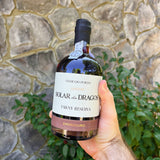
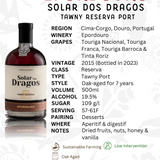
Epordouro 'Solar dos Dragos' Tawny Reserva Port
A beautifully rich, smooth and indulgent Tawny Port from Portugal's spectacular Douro Valley, combining luscious red fruit preserves, caramelised sweetness and delicate oak complexity with a wonderfully velvety finish. Aged for an average of seven years in French oak barrels, this elegant Reserva captures the remarkable transformation that makes traditional Tawny Port so special.
Solar dos Dragos Tawny Reserva comes from Cima Corgo, in the heart of Portugal's historic Douro Valley, where dramatic terraced vineyards climb the steep hillsides above the winding Douro River.
Produced from four traditional Portuguese red grapes — Touriga Nacional, Touriga Franca, Tinta Roriz and Tinta Barroca — this beautifully expressive Port combines the region's centuries-old winemaking traditions with the patient art of barrel ageing.
After fortification, the wine spends an average of seven years maturing in French oak barrels, gradually developing the softer texture, mellow colour and complex flavours that distinguish Tawny Port from its fruitier Ruby counterpart.
In the glass, expect a beautiful light reddish-brown colour with inviting aromas of red berry preserves, caramel, dried fruit and gentle oak spice.
On the palate, it's sweet, rich and wonderfully smooth, with concentrated fruit, a creamy caramelised character and beautifully softened tannins. A pleasant freshness keeps the wine balanced, leading to an elegant, lingering finish.
At 19.5% ABV, this is a deliciously indulgent Port to enjoy slowly, whether served alongside dessert, paired with mature cheeses or simply savoured after dinner.
Meet the grapes behind the blend
Four traditional Douro red grapes come together to create the structure, fruit and complexity that make this Tawny Reserva so enjoyable.
Touriga Nacional – The Power and Aromatics
Touriga Nacional is one of Portugal's most celebrated indigenous red grapes, particularly famous for its important role in Port production.
Known for its small berries, deeply coloured skins and concentrated flavours, it typically contributes blackberry, blackcurrant, dark plum and violet, alongside impressive tannin structure.
These characteristics make it particularly valuable in fortified wines, where concentration and structure provide a foundation for ageing.
In Solar dos Dragos Tawny Reserva, Touriga Nacional contributes depth, aromatic intensity and structure.
Touriga Franca – The Elegance
Despite its name, Touriga Franca is a Portuguese grape rather than a French variety.
It's one of the Douro's most important traditional red grapes, prized for its expressive floral aromas and beautifully rounded fruit character.
Typical characteristics include blackberry, raspberry, rose petals, violet and delicate spice.
Compared with Touriga Nacional, it often contributes a softer, more approachable texture, making the two varieties excellent blending partners.
In this Tawny Reserva, Touriga Franca adds elegance and aromatic complexity.
Tinta Roriz – The Fruit and Structure
Tinta Roriz is the Portuguese name for Tempranillo, one of Spain's most famous red grape varieties.
In the Alentejo, the same grape is commonly known as Aragonez.
It's widely planted throughout the Douro and has long been an important component of both dry red wines and traditional Port blends.
Typical characteristics include red cherry, strawberry, plum and subtle spice, accompanied by good tannin structure.
In Solar dos Dragos Tawny Reserva, Tinta Roriz contributes ripe fruit and a firm foundation that develops beautifully during barrel ageing.
Tinta Barroca – The Richness
Tinta Barroca is another traditional Douro grape, particularly valued for its generous fruit and ability to accumulate sugar.
It's often associated with ripe plum, blackberry, dark cherry and soft, rounded tannins.
Its naturally generous character makes it particularly useful in Port production, where ripe fruit and sweetness are important elements of the finished wine.
In this blend, Tinta Barroca adds richness and a lovely sense of fullness.
Together, these four grapes provide the fruit, structure and balance that allow Solar dos Dragos Tawny Reserva to develop its distinctive character during oak ageing.
What exactly makes Port wine different?
Port is one of Portugal's most famous wines, but what makes it different from an ordinary red wine?
The answer lies in a process called fortification.
Most table wines are fermented until the yeast has converted most of the grape's natural sugar into alcohol.
Port, however, is traditionally fortified partway through fermentation.
The winemaker adds a neutral grape spirit, known in Portuguese as aguardente vínica, which raises the alcohol level and stops fermentation before all the natural grape sugars have been consumed.
The result is a wine that retains natural sweetness alongside a higher alcohol content, typically around 19–22%.
And here's something particularly interesting.
Port's sweetness generally comes from the grapes themselves, rather than sugar being added to the finished wine.
By stopping fermentation early, the winemaker preserves a portion of the original grape sugar.
The combination of natural sweetness, concentrated fruit and higher alcohol creates the rich, distinctive character for which Port is celebrated.
But what happens after fortification is just as important.
Depending on how the wine is aged, Port can develop into very different styles, from intensely fruity Ruby Ports to beautifully mellow, nutty Tawnies.
What's the difference between Tawny and Ruby Port?
Although both Tawny and Ruby Port begin with red grapes grown in the Douro Valley, their ageing styles can produce remarkably different wines.
Ruby Port – Fruit and Freshness
Ruby Ports are generally aged in ways that limit their exposure to oxygen, often using larger vessels or relatively short ageing periods.
This helps preserve their deep ruby colour and vibrant fruit character.
Typical flavours include blackberry, cherry, plum and dark chocolate, often accompanied by youthful tannins and concentrated fruit.
Ruby Ports are generally the more fruit-driven style.
Tawny Port – Complexity and Mellow Richness
Tawny Ports, particularly those matured for longer periods in wooden barrels, experience gradual exposure to oxygen.
Over time, this controlled oxidation changes both the wine's colour and flavour.
The deep red colour gradually softens towards lighter red, amber and eventually tawny-brown shades.
Fresh fruit aromas evolve towards dried fruit, nuts, caramel, toffee and gentle spice, while the tannins become softer and the texture increasingly mellow.
Solar dos Dragos Tawny Reserva is a lovely example of this transformation.
Its average seven years in French oak barrels allow the wine to develop a creamy, caramelised character while retaining some of the vibrant red fruit associated with younger Ports.
It's the wonderful meeting point between youthful fruit and the mellow complexity of barrel-aged Tawny.
Why does Tawny Port develop caramel and nutty flavours?
Here's one of the most fascinating things about Tawny Port.
The winemaker doesn't need to add caramel, nuts or dried fruit to create those flavours.
Instead, they develop naturally as the wine ages.
During barrel maturation, small amounts of oxygen gradually interact with the wine.
This process, known as oxidative ageing, encourages a series of chemical reactions that change the wine's aroma, colour and texture.
Over time, fresh berry characteristics can evolve towards dried fruit, while new aromas reminiscent of caramel, toasted nuts, spice and toffee may emerge.
The exact balance depends on factors such as the wine's original composition, the size and condition of the barrels, and the length of ageing.
Oak itself can also contribute subtle aromatic compounds, while the gradual evolution of tannins creates a smoother, more integrated mouthfeel.
For Solar dos Dragos Tawny Reserva, an average of seven years in French oak provides the time needed to develop this beautifully mellow character.
It's a wonderful example of how patience can transform a wine.
What does Reserva mean for Tawny Port?
The word Reserva appears on many Portuguese wine labels, but in Port it has a specific significance.
A Tawny Reserva is a higher-quality category of Tawny Port, subject to tasting approval and regulatory requirements.
Unlike a standard Tawny, which may emphasise youthful fruit, a Reserva Tawny is expected to show greater complexity and the influence of ageing.
However, there's an important distinction between Tawny Reserva and a 10-Year-Old Tawny.
A 10-Year-Old Tawny is a blend assessed to have the character associated with that age designation.
Reserva Tawny, on the other hand, doesn't carry a specific age indication on the label.
For Solar dos Dragos Tawny Reserva, Epordouro confirms that the wine spends an average of seven years ageing in French oak barrels.
That makes it a particularly appealing introduction to more mature Tawny styles, offering some of the complexity associated with extended ageing while remaining beautifully approachable.
What makes Cima Corgo special?
The Douro Valley is traditionally divided into three subregions: Baixo Corgo, Cima Corgo and Douro Superior.
Cima Corgo occupies the central part of the Douro and is particularly famous for its historic vineyards and outstanding Port production.
Compared with the wetter, more Atlantic-influenced Baixo Corgo to the west, Cima Corgo generally experiences warmer, drier conditions, allowing grapes to develop impressive concentration and flavour.
The landscape is dominated by steep hillsides, winding river valleys and the distinctive terraces that have made the Douro one of the world's most recognisable wine regions.
Much of the region's vineyard land is characterised by schist-derived soils, which can fracture and allow vine roots to explore deep into the rocky ground.
These conditions are particularly well suited to the traditional Port grapes, including Touriga Nacional, Touriga Franca, Tinta Roriz and Tinta Barroca.
The region's ability to produce ripe, concentrated grapes provides the foundation for wines that can develop remarkable complexity during ageing.
And for Solar dos Dragos Tawny Reserva, that journey continues in French oak barrels, where time gradually transforms the wine's youthful fruit into something beautifully mellow and complex.
A 15th-century manor and the story behind Solar dos Dragos
The name Solar dos Dragos has a fascinating connection to the history of Cabêda, the village associated with Epordouro's family winemaking heritage.
The Portuguese word solar refers to a manor house or ancestral family residence.
The name comes from an old manor house in Cabêda, established in the 15th century and once belonging to a noble family of winegrowers named Dragos.
The manor was closely connected to the area's historic wine production, although today only its ruins remain.
Rather than allowing that story to disappear, Epordouro has preserved its memory through the names of its wines.
The winery's Solar dos Dragos, Portas do Solar and Encostas do Solar ranges all draw inspiration from this historic connection.
It's a lovely reminder that Portuguese wine labels often tell stories about the people, buildings and landscapes that shaped a region long before the modern winery existed.
And for a Tawny Reserva aged for an average of seven years, that connection to history and tradition feels particularly appropriate.
About Epordouro
Epordouro is a family-run Portuguese winery rooted in Cabêda, in the Cima Corgo subregion of the Douro Valley.
The modern winery was established in 1998 by brothers Manuel Luís and Hermínio Morais, who wanted to revive their family's ancestral connection to winemaking.
Rather than allowing that heritage to disappear, the brothers dedicated themselves to producing wines that celebrated the traditional grapes and character of the Douro.
Their wines include the Encostas do Solar, Portas do Solar and Solar dos Dragos ranges, each exploring different expressions of the region.
The names themselves preserve the memory of the historic Solar dos Dragos manor house in Cabêda, connecting the modern family business with centuries of local wine history.
Today, Epordouro produces a diverse range of wines, from refreshing whites and elegant rosés to structured reds and traditional Port wines.
The winery also produces olive oil, another important part of the Douro's agricultural heritage.
And while the Douro is one of Portugal's most internationally recognised wine regions, Epordouro represents the smaller, independent family producers who continue to preserve its traditions.
Their Solar dos Dragos Tawny Reserva is a particularly beautiful expression of that philosophy, combining traditional Douro grape varieties with patient barrel ageing to create a wine of richness, elegance and unmistakable Portuguese character.
Aroma: Red Berry Preserves · Caramel · Dried Fruit · Gentle Oak Spice
Palate: Sweet · Rich · Velvety · Creamy Caramel · Soft Tannins · Balanced Freshness · Lingering Finish
Pair with: Crème Brûlée · Pecan Pie · Caramel Desserts · Almond Tart · Roasted Nuts · Aged Cheddar · Blue Cheese · Portuguese Egg Custard Tarts
Serving Temperature: 14–16°C / 57–61°F