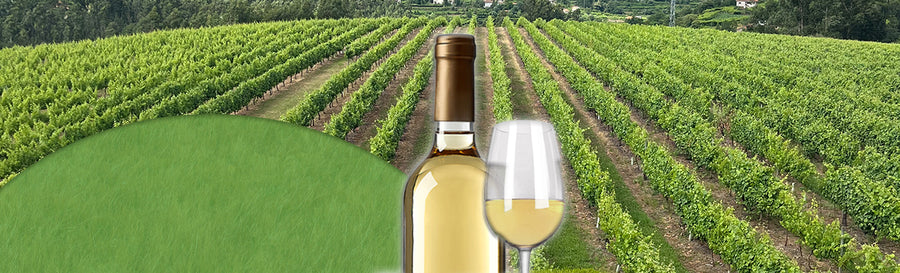
Phulia Loureiro & Alvarinho White 2025
Two of Portugal's most celebrated white grapes, two very different ageing techniques, and one beautifully balanced wine. Phulia's Loureiro & Alvarinho combines the fragrant, floral freshness of stainless-steel-aged Loureiro with the richer texture and complexity of oak-aged Alvarinho, creating a wonderfully expressive white that offers both elegance and depth.
From the lush, Atlantic-influenced landscapes of Portugal's Vinho Verde region, this thoughtful blend demonstrates just how much character can be created by treating two grape varieties differently.
Phulia is based in the Lima Valley of northern Portugal, an area particularly celebrated for Loureiro, one of the country's most distinctive indigenous white grapes.
Here, the cooling influence of the Atlantic Ocean, the region's granite-derived soils and centuries of winemaking tradition create the conditions for wonderfully fresh, aromatic wines.
But Phulia's Loureiro & Alvarinho takes the region's familiar white wine style in a more sophisticated direction.
Rather than treating both grapes identically, the winemaker gives each variety its own ageing environment.
The Alvarinho is aged in oak, while the Loureiro is aged in stainless steel.
And that distinction is central to the wine's personality.
The oak-aged Alvarinho contributes body, texture and a richer dimension to the blend, while the stainless-steel-aged Loureiro preserves its delicate floral aromas, vibrant citrus and refreshing character.
Together, they create a wine that balances generosity with freshness.
Expect inviting aromas of citrus, white flowers, ripe peach and orchard fruit, with a rounded palate, lively acidity and a beautifully balanced finish.
Depending on the oak's age, size and degree of toast, the Alvarinho may also contribute subtle notes of spice or additional richness without overwhelming the wine's natural fruit.
At 12% ABV, this is a dry, expressive white wine that offers complexity without heaviness.
It's a wonderful choice for anyone who enjoys the freshness of Vinho Verde but wants something with a little more texture and depth.
And the story of how these two grapes are aged is every bit as interesting as the wine itself.
Meet the grapes behind the blend
Loureiro – The Fragrant, Fresh Personality
Loureiro is one of Portugal's most distinctive indigenous white grapes and is particularly associated with the Lima Valley.
Its name comes from the Portuguese word louro, meaning laurel or bay leaf, reflecting the aromatic character traditionally associated with the variety.
Loureiro is celebrated for its beautiful floral aromas, lively citrus and naturally refreshing acidity.
Typical characteristics include lemon, lime, green apple, orange blossom, jasmine and delicate herbal notes.
It's a grape that can produce wonderfully expressive wines without needing excessive ripeness or high alcohol.
And that's particularly important in the Atlantic-influenced climate of northern Portugal.
In this blend, Phulia ages the Loureiro in stainless steel, allowing its fresh, fragrant personality to remain central to the finished wine.
The result is a component that contributes aromatic lift, bright fruit and freshness.
Alvarinho – The Structure and Depth
Alvarinho is one of Portugal's most internationally celebrated white grape varieties.
Known as Albariño across the border in Spain, it's particularly associated with northern Portugal and Galicia, where the Atlantic climate helps shape its distinctive character.
Alvarinho is capable of producing wines with remarkable aromatic intensity, vibrant acidity and considerable structure.
Typical flavours include ripe peach, apricot, citrus, green apple and tropical fruit, sometimes accompanied by a subtle saline or mineral impression.
Unlike some lighter white varieties, Alvarinho often has enough natural concentration and structure to respond beautifully to oak ageing.
And that's exactly what makes it such an interesting partner for Loureiro.
In Phulia's blend, the Alvarinho is aged in oak, adding a richer textural dimension and greater complexity.
Rather than relying on oak to dominate the wine, the idea is to complement Alvarinho's natural character.
Together, Loureiro and Alvarinho create a beautiful contrast: fragrant freshness on one side, richness and structure on the other.
Why age the Alvarinho in oak but the Loureiro in stainless steel?
This is perhaps the most fascinating aspect of Phulia's Loureiro & Alvarinho.
The two grapes are aged differently because the winemaker wants to preserve and enhance different characteristics in each variety.
Stainless steel and oak can have very different effects on wine.
Stainless steel is essentially neutral. It doesn't contribute flavours of its own, and a properly managed stainless-steel vessel can limit the wine's exposure to oxygen.
This makes it particularly useful for preserving delicate fruit and floral aromas.
Oak, by contrast, is a porous material that allows small amounts of oxygen to interact with the wine over time.
Depending on the barrel's characteristics, this gradual oxygen exposure can influence the wine's texture, aromatic development and overall complexity.
Oak may also contribute flavours such as vanilla, toast, spice or subtle nuttiness, although the intensity depends on whether the barrel is new or used, its size, toast level and the length of ageing.
For Phulia, the distinction is particularly meaningful.
Loureiro's greatest strength is its delicate aromatic character.
By ageing it in stainless steel, the winemaker can preserve its expressive floral notes, bright citrus and fresh personality.
Alvarinho, meanwhile, has the structure and concentration to benefit from oak ageing.
The oak can help develop a richer, more rounded texture and additional complexity.
When the two components come together, the result is a wine that offers both freshness and depth.
It's a lovely example of how thoughtful winemaking can allow two different grapes to complement one another.
Does oak ageing always make white wine taste oaky?
Not at all.
One of the most common misconceptions about oak-aged white wine is that it must taste strongly of vanilla, butter or toast.
But oak ageing can be much more subtle.
The purpose of oak isn't always to add flavour. Sometimes it's primarily about developing texture and complexity.
Several factors influence how oak affects wine.
New oak generally contributes more noticeable flavours because the wood still contains a greater concentration of extractable aromatic compounds.
Older barrels, which have already been used for wine, tend to contribute less obvious oak flavour.
The size of the vessel also matters.
Smaller barrels expose more wine to the wood's surface relative to their volume, potentially creating a more noticeable influence.
Larger barrels can provide a gentler effect.
And the length of ageing makes a difference too.
For a grape such as Alvarinho, careful oak ageing can enhance the wine's natural structure without overwhelming its citrus and stone-fruit character.
A beautifully judged oak-aged white wine should still taste like the grape it came from.
In Phulia's blend, the presence of fresh, stainless-steel-aged Loureiro helps maintain that balance.
The result is intended to be a wine with greater depth and texture, rather than an aggressively oaky white.
What happens to wine as it ages in oak?
Oak ageing can influence wine in several fascinating ways.
First, oak is slightly porous.
This means small amounts of oxygen can gradually interact with the wine during maturation.
Controlled oxygen exposure can influence the development of certain aromas and help change how the wine feels on the palate.
Second, oak contains natural compounds that can contribute flavour.
Depending on the barrel, these might include notes reminiscent of vanilla, baking spice, toast or wood.
But not every oak-aged wine displays these flavours strongly.
Third, the ageing environment can influence the perception of texture.
A wine may develop a more rounded or integrated mouthfeel as it matures.
And if the wine is aged in contact with its fine lees — the spent yeast cells remaining after fermentation — this can contribute further texture and complexity.
However, lees ageing and oak ageing are separate techniques, and one doesn't automatically imply the other.
For Phulia's Alvarinho, the confirmed detail is that the wine is aged in oak.
The precise barrel type, age and duration haven't been established for the 2025 vintage.
What makes the approach interesting is how this richer component is balanced by the freshness of the stainless-steel-aged Loureiro.
Why are Loureiro and Alvarinho such good blending partners?
Portugal has an extraordinary diversity of indigenous grape varieties, and blending has long been an important part of its winemaking culture.
Different grapes can contribute complementary characteristics.
Some provide aromatic intensity.
Others contribute body, texture or structure.
And others are particularly valuable for their refreshing acidity.
Loureiro and Alvarinho are a wonderful example of this relationship.
Loureiro is especially celebrated for its floral perfume and lively freshness.
Alvarinho is prized for its fruit concentration, structure and ability to develop complexity.
Both can produce excellent wines individually.
But when blended, they can create something that neither grape would express in quite the same way on its own.
Phulia takes this idea one step further by ageing the varieties differently.
The stainless-steel-aged Loureiro brings freshness and aromatic definition.
The oak-aged Alvarinho adds a richer dimension.
The result is a wine built around contrast and balance.
It's a wonderful example of the art of blending — not simply combining grapes, but combining different expressions of those grapes.
Why is Alvarinho so well suited to oak ageing?
Not every white grape responds to oak in the same way.
Some varieties are particularly delicate, and strong oak influence can overwhelm their natural aromas.
Others have enough concentration, acidity and structure to benefit from maturation in wood.
Alvarinho belongs to the latter group.
Its naturally vibrant acidity is one of the reasons it can work so well with richer winemaking styles.
Acidity provides freshness and helps balance the additional texture that can develop during oak ageing.
Alvarinho also has a relatively expressive flavour profile, with citrus, stone fruit and sometimes tropical-fruit characteristics.
These flavours can complement subtle oak influences beautifully.
And while many people associate Vinho Verde with young, light, stainless-steel-aged whites, Alvarinho demonstrates that the region is capable of producing much more complex wines.
Some examples are fermented or aged in oak, while others spend extended periods on their lees.
Certain high-quality Alvarinhos can also develop beautifully with bottle age.
Phulia's Loureiro & Alvarinho introduces customers to this more textured side of Vinho Verde without losing the freshness that makes the region so appealing.
Why does stainless steel preserve Loureiro's floral character?
Stainless steel has become one of the most widely used materials in modern white winemaking.
And there's a good reason for that.
It allows winemakers to preserve the natural characteristics of the grapes without introducing additional flavours from the vessel.
Unlike oak, stainless steel doesn't contribute woody aromas or tannins.
It also allows precise temperature control during fermentation and ageing.
Temperature matters because some of the aromatic compounds responsible for fruity and floral aromas are volatile.
Careful temperature management can help preserve these delicate characteristics.
For a grape such as Loureiro, this is particularly valuable.
Loureiro is celebrated for its fragrant notes of citrus blossom, jasmine, green apple and fresh herbs.
By keeping the wine in stainless steel, Phulia can protect these delicate aromas and maintain a fresh, expressive character.
And when that component is blended with the richer oak-aged Alvarinho, it helps ensure the finished wine remains lively rather than heavy.
What makes the Lima Valley special?
The Lima Valley is one of the most beautiful and distinctive wine-growing areas within Portugal's Vinho Verde region.
It follows the River Lima through the lush landscapes of northern Portugal before reaching the Atlantic Ocean near Viana do Castelo.
The valley is particularly famous for Loureiro, which has become one of its signature grape varieties.
The climate is strongly influenced by the Atlantic Ocean, bringing relatively mild temperatures, abundant rainfall and humid conditions.
These growing conditions are quite different from those found in Portugal's hotter inland wine regions.
And they help explain why the Lima Valley is so closely associated with fresh, aromatic white wines.
Much of the region's vineyard landscape is characterised by granite-derived soils.
As granite weathers, it can form relatively coarse, sandy soils, although individual vineyard sites vary considerably.
These soils can influence drainage, water availability and how vine roots develop.
Combined with the Atlantic climate and traditional grape varieties, they help create the growing conditions associated with the region's distinctive wines.
For Phulia, the Lima Valley provides the setting for a range of wines that celebrate both traditional Portuguese grapes and more contemporary winemaking approaches.
Why doesn't all Vinho Verde have a spritz?
One of the most persistent misconceptions about Vinho Verde is that every wine from the region should have a gentle fizz.
Historically, some Vinho Verde wines retained carbon dioxide from fermentation, creating the delicate spritz known locally as agulha.
This became closely associated with the region's youthful, refreshing wine style.
But modern Vinho Verde is much more diverse.
Today, the region produces completely still wines, gently spritzy whites, rosés, deeply coloured reds and fully sparkling wines.
And many of its most complex white wines are deliberately made without noticeable effervescence.
Vinho Verde is a geographical wine designation, not a requirement for bubbles.
Phulia's Loureiro & Alvarinho is best understood through its combination of grapes and ageing techniques, rather than assuming it has the traditional Vinho Verde spritz.
It's another reminder of just how diverse this fascinating Portuguese wine region has become.
Why does this wine work so well with food?
One of the great advantages of blending a fresh, aromatic grape with a richer, more structured variety is the versatility it can create at the dinner table.
And Phulia's Loureiro & Alvarinho is a lovely example.
Loureiro's refreshing acidity helps balance rich foods, while its floral and citrus notes complement seafood, fresh herbs and delicate flavours.
The oak-aged Alvarinho adds a more substantial dimension, making the wine particularly appealing alongside dishes with richer textures.
This creates opportunities for pairings that might overwhelm a very light Vinho Verde.
Try it with grilled sea bass, roast chicken, seafood risotto, baked cod or creamy mushroom dishes.
The wine's freshness can cut through richness, while its rounded texture complements the food.
It's also a wonderful partner for traditional Portuguese dishes.
Bacalhau com natas, a rich baked salt-cod dish with potatoes and cream, would make a particularly interesting pairing.
The wine's acidity refreshes the palate, while the Alvarinho's additional texture complements the creamy sauce.
Grilled octopus with olive oil, garlic and potatoes would be another excellent choice.
And for something simpler, try it with roasted vegetables, grilled shrimp or a selection of Portuguese cheeses.
It's a wine that offers enough freshness to enjoy on its own but enough depth to shine alongside a meal.
About Phulia
Phulia is a small, independent Portuguese wine project based in Cardielos, near Viana do Castelo, in the beautiful Lima Valley of northern Portugal.
Founded by João Martins and Luís Simplício, Phulia was created around a shared passion for the traditional grapes, landscapes and winemaking heritage of Vinho Verde.
Rather than pursuing large-scale production, the project focuses on small batches and thoughtful winemaking that allows the character of the vineyards to remain central to the wines.
Its vineyards are influenced by the nearby Atlantic Ocean and the granite-rich landscape of the Lima Valley.
Phulia works with traditional Portuguese varieties including Loureiro, Alvarinho, Trajadura, Arinto and Vinhão.
The project is known for both fresh, expressive white wines and more unconventional creations that explore the possibilities of these indigenous grapes.
Its range includes Mal Acabado Pét-Nat, the unconventional Desvirttuado Vinhão and expressive whites such as Sensation.
Each wine offers a different interpretation of the region's grapes and winemaking traditions.
And while Phulia respects the heritage of northern Portugal, the project clearly isn't afraid to experiment.
Loureiro & Alvarinho is a particularly thoughtful example of that philosophy.
By ageing the Alvarinho in oak and the Loureiro in stainless steel, Phulia allows each variety to express a different side of its personality.
The result brings together the freshness and floral elegance of Loureiro with the richer texture and structure of Alvarinho.
Two indigenous Portuguese grapes, two different ageing techniques and one beautifully balanced expression of Vinho Verde — a wine that proves freshness and complexity can go hand in hand.
Aroma: Citrus Blossom · Lemon · Green Apple · White Flowers · Ripe Peach · Subtle Stone Fruit
Palate: Dry · Fresh Citrus · Orchard Fruit · Rounded Texture · Vibrant Acidity · Balanced, Persistent Finish
Pair with: Grilled Sea Bass · Baked Cod · Bacalhau com Natas · Seafood Risotto · Roast Chicken · Grilled Octopus · Creamy Mushroom Dishes · Roasted Vegetables · Portuguese Cheeses
Serving Temperature: 9–11°C / 48–52°F