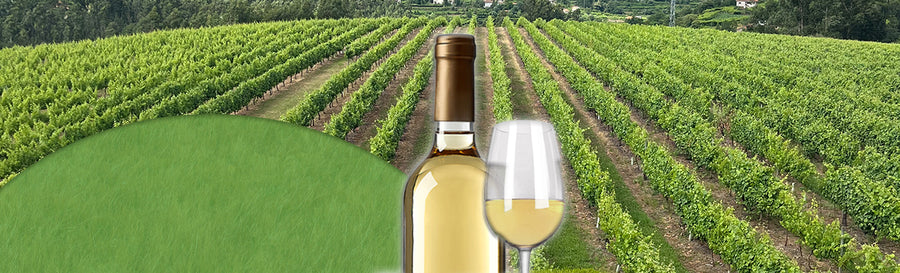
Rapazotes Reserva White Arinto & Gouveio 2023
Rich, elegant and beautifully refreshing, Rapazotes Reserva White is a sophisticated expression of Portugal's spectacular Douro Valley. Bringing together the vibrant citrus acidity of Arinto with the generous fruit and rounded character of Gouveio, this carefully oak-aged white offers wonderful depth, subtle complexity and a long, beautifully balanced finish.
When people think of the Douro Valley, they often imagine powerful red wines, centuries-old Port houses and dramatic terraces carved into steep mountainsides.
But the Douro is also home to some of Portugal's most exciting white wines.
And Rapazotes Reserva White 2023 is a wonderful example of just how much character the region's indigenous white grape varieties can offer.
Made with Arinto and Gouveio, this expressive Reserva brings together two grapes with beautifully complementary personalities.
Arinto is celebrated for its naturally vibrant acidity, crisp citrus and remarkable ability to retain freshness, even in relatively warm growing conditions.
Gouveio contributes a different dimension, with ripe orchard fruit, delicate floral notes and a more generous, rounded palate.
Together, they create a wine that balances richness with freshness.
But there's another important element to this wine.
Rapazotes ages its Reserva White in oak, allowing the wine to develop additional texture, structure and aromatic complexity.
Rather than producing a simple, youthful white, the winemaker creates something more substantial and layered.
Expect an inviting combination of ripe pear, citrus, peach, white flowers and subtle spice, with the possibility of delicate toasted or nutty nuances from the oak.
On the palate, the wine is dry and generous, with a rounded texture balanced by Arinto's mouth-watering acidity.
At 14% ABV, this is a fuller, more substantial expression of Portuguese white wine, yet its freshness keeps the overall impression balanced.
It's a wonderful wine for customers who enjoy textured, oak-aged whites but want to discover something beyond the familiar international grape varieties.
And there's a fascinating story behind how these two indigenous grapes complement one another.
Meet the grapes behind the blend
Arinto – The Freshness and Structure
Arinto is one of Portugal's most important indigenous white grape varieties.
It's grown throughout the country, from the Atlantic-influenced vineyards of Vinho Verde to the warmer landscapes of central and southern Portugal.
In Vinho Verde, Arinto is also known as Pedernã.
But regardless of where it's grown, one of its most remarkable characteristics is its ability to retain naturally high acidity.
Typical aromas and flavours include lemon, lime, grapefruit, green apple and subtle herbal notes.
In cooler regions, Arinto can produce particularly crisp, citrus-driven wines.
In warmer areas, the fruit may become riper and more generous, but the grape can still retain the acidity needed to create balance.
This makes Arinto especially valuable in the Douro Valley.
The region's hot summers can encourage grapes to develop considerable ripeness and sugar.
Without sufficient acidity, the resulting wines could feel heavy or overly rich.
Arinto helps provide the freshness and structure that keep a generous white wine lively.
In Rapazotes Reserva, it provides a crisp backbone that balances the wine's ripe fruit and oak-influenced texture.
Gouveio – The Richness and Elegance
Gouveio is another fascinating indigenous Portuguese white grape, particularly associated with the Douro and Dão regions.
And here's an interesting fact.
Gouveio is the same grape variety known as Godello in northwestern Spain.
Across the border in Galicia, Godello has become increasingly celebrated for producing sophisticated white wines with impressive texture, freshness and ageing potential.
In Portugal, Gouveio has long played an important role in traditional white blends.
The grape typically produces wines with ripe pear, apple, peach, citrus and delicate floral characteristics.
It can offer greater body and texture than some lighter white varieties, making it particularly appealing in more complex white wines.
Gouveio also responds well to thoughtful winemaking techniques, including oak ageing.
Its natural fruit concentration and structure can complement the additional texture developed during maturation.
In Rapazotes Reserva, Gouveio contributes generosity, ripe fruit and a rounded palate.
Together, Arinto and Gouveio create a wonderful balance: one grape brings energy and freshness, while the other contributes richness and depth.
Why is Gouveio called Godello in Spain?
Portugal and Spain share an extraordinary winemaking history, and many grape varieties have crossed their modern borders over centuries.
One of the most interesting examples is Gouveio.
In Portugal, the grape is known as Gouveio.
Across the border in Spain, particularly in Galicia, it's called Godello.
Modern ampelographic research has established that these names refer to the same grape variety.
And while the grape is genetically the same, the wines can be quite different depending on where it's grown.
Godello has become particularly associated with the Spanish appellations of Valdeorras and Ribeira Sacra, where producers create everything from fresh, citrus-driven whites to more complex, oak-aged expressions.
In Portugal, Gouveio is an important component of many Douro white blends.
The grape's ability to produce wines with body, aromatic character and refreshing acidity makes it particularly versatile.
It's a wonderful reminder that grape varieties don't necessarily respect national borders.
And for customers who already enjoy Spanish Godello, Rapazotes Reserva offers a fascinating opportunity to discover the Portuguese expression of the same grape.
Why is Arinto so valuable in a warm region like the Douro?
The Douro Valley is famous for its hot, dry summers.
In some parts of the region, temperatures can become extremely high during the growing season.
These conditions encourage grapes to accumulate sugar and develop ripe fruit flavours.
But heat also creates challenges.
As grapes ripen, their acidity generally declines.
And when temperatures are particularly high, that loss of acidity can become more pronounced.
This is where Arinto becomes especially valuable.
Arinto is naturally capable of retaining relatively high acidity, even when grown in warm conditions.
That doesn't mean its acidity remains unchanged throughout ripening.
But compared with many other white grape varieties, it can maintain an appealing level of freshness.
For winemakers, this provides an important advantage.
They can produce wines with ripe fruit and substantial body while retaining the acidity needed for balance.
In Rapazotes Reserva, Arinto helps prevent the wine's richer character and oak ageing from becoming overwhelming.
The result is a white that offers generosity without sacrificing freshness.
Why does the Douro produce such different white wines from Vinho Verde?
Although both regions are located in northern Portugal, the Douro and Vinho Verde have remarkably different climates.
And the explanation lies largely in geography.
Vinho Verde is strongly influenced by the Atlantic Ocean.
Its relatively mild temperatures, frequent rainfall and humid conditions are particularly well suited to producing fresh, aromatic white wines.
The Douro, meanwhile, lies inland, protected from much of the Atlantic influence by mountain ranges.
As a result, much of the region experiences hotter summers, lower rainfall and greater temperature extremes.
These conditions can produce grapes with greater ripeness and concentration.
But the Douro isn't uniformly hot.
Elevation, slope orientation and proximity to the river create considerable variation between vineyard sites.
Some higher-altitude vineyards can experience significantly cooler temperatures than the valley floor.
And this diversity is particularly important for white wine production.
The Douro can produce whites that combine ripe, generous fruit with surprisingly vibrant acidity.
Rapazotes Reserva demonstrates this beautifully.
Arinto provides freshness, Gouveio adds body and fruit, and oak ageing contributes another layer of complexity.
It's a very different expression of northern Portuguese white wine from the delicate, floral whites of the Lima Valley.
What makes the Baixo Corgo special?
The Douro is traditionally divided into three major subregions: Baixo Corgo, Cima Corgo and Douro Superior.
Each has its own geographical and climatic characteristics.
The Baixo Corgo is the westernmost of the three, situated closer to the Atlantic Ocean.
Although still much warmer and drier than coastal Vinho Verde, it generally receives more rainfall than the central and eastern parts of the Douro.
The Cima Corgo lies farther inland, while the Douro Superior, towards Spain, is typically the hottest and driest subregion.
Rapazotes identifies the Baixo Corgo as the origin of its Reserva White in the producer's documentation for the preceding 2022 vintage.
And that regional context is particularly interesting for white wine.
Compared with some hotter parts of the Douro, the Baixo Corgo's relatively greater Atlantic influence can help create conditions favourable to retaining freshness.
Of course, vineyard elevation, slope and exposure remain important.
A sunny, sheltered vineyard can behave very differently from a cooler, higher-altitude site, even within the same subregion.
This diversity allows the Douro to produce white wines with a remarkable range of styles.
Why is oak ageing used for white wines?
When people think of oak-aged wine, they often imagine rich Chardonnay or powerful red wines.
But oak can be equally valuable for traditional Portuguese white grape varieties.
And Rapazotes Reserva is a lovely example.
Oak ageing can influence both the flavour and texture of wine.
Oak is a porous material, allowing small amounts of oxygen to interact with the wine over time.
This gradual exposure can influence aromatic development and the way the wine feels on the palate.
Oak can also contribute flavour compounds that create aromas reminiscent of vanilla, toast, baking spice or subtle nuttiness.
However, the intensity of these flavours depends on several factors.
New oak generally contributes more noticeable wood-derived aromas than older barrels.
Smaller barrels expose more wine to the wood relative to their volume.
And longer ageing can increase the influence of the oak, although the relationship isn't always straightforward.
The purpose of oak ageing isn't necessarily to make a wine taste strongly of wood.
For a wine such as Rapazotes Reserva, oak can be used to develop additional texture and complexity while allowing the grapes' natural fruit and acidity to remain central.
The producer documents six months in French oak for its 2022 Reserva White, illustrating the style of maturation used for this wine.
For the 2023 vintage, The Vinho confirms oak ageing, although the exact duration and barrel specifications still need confirmation.
What does Reserva mean for a Portuguese white wine?
The word Reserva appears on many Portuguese wine labels.
And while it's often associated with oak ageing or a more premium style, it has a more specific meaning within Portugal's wine classification system.
For wines using the regulated Reserva designation, additional quality requirements apply under the relevant appellation rules.
These can include standards relating to natural alcoholic strength and sensory assessment.
But here's an important distinction.
Reserva doesn't automatically mean that a Portuguese wine has spent a fixed number of months in oak.
Unlike certain ageing classifications used elsewhere, the term isn't simply a universal barrel-ageing formula.
A producer may create a Reserva through vineyard selection, grape quality, concentration, maturation or a combination of different factors.
For Rapazotes, oak ageing is an important part of its Reserva White's identity.
But the wine's character begins with the grapes themselves.
Arinto contributes the freshness needed to balance a richer style, while Gouveio provides fruit concentration and texture.
It's the combination of these elements that makes the wine appealing.
About Rapazotes
Rapazotes is a Portuguese wine producer rooted in the Douro Valley, with a focus on expressing the region's traditional indigenous grape varieties and remarkable winemaking heritage.
The project celebrates the extraordinary landscapes of northern Portugal, from the steep vineyard slopes to the dramatic valleys carved by the River Douro.
Its range includes both red and white wines, exploring the different personalities of the region's native grapes.
And while the Douro is often associated with powerful reds and fortified wines, Rapazotes also demonstrates the potential of its traditional white varieties.
The name Rapazotes has a playful Portuguese character, related to rapaz, meaning boy or lad.
It's an approachable identity for a producer working in one of the world's most historic wine regions.
The range includes De Rua, Reserva and other expressions of the Douro's traditional grapes.
Rapazotes Reserva White is a particularly lovely example of the producer's approach.
By combining Arinto and Gouveio and incorporating oak ageing, the wine brings together the freshness of indigenous Portuguese grapes with a richer, more complex style of winemaking.
The result is a white that feels generous, elegant and wonderfully balanced.
Two traditional Portuguese grapes, thoughtful oak ageing and the extraordinary landscape of the Douro Valley — Rapazotes Reserva White is a beautifully expressive reminder that some of Portugal's most exciting wines aren't red at all.
Aroma: Ripe Pear · Peach · Lemon · Citrus Blossom · Orchard Fruit · Subtle Oak Spice
Palate: Dry · Medium to Full-bodied · Ripe Orchard Fruit · Rounded Texture · Refreshing Acidity · Subtle Oak Complexity · Long, Balanced Finish
Pair with: Bacalhau com Natas · Polvo à Lagareiro · Grilled Sea Bass · Seafood Risotto · Roast Chicken · Creamy Mushroom Dishes · Roast Pork · Mature Portuguese Cheeses
Serving Temperature: 10–12°C / 50–54°F