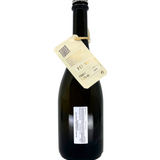
Turra Pét-Nat Vinhão Red 2025
Bold, vibrant and wonderfully unconventional, Turra Pét-Nat Vinhão is a naturally sparkling red wine made from one of Portugal's most distinctive indigenous grape varieties. Combining Vinhão's extraordinary colour, lively dark-fruit character and refreshing acidity with the natural bubbles of ancestral-method winemaking, this expressive wine offers an entirely different perspective on what sparkling wine can be.
From the mountainous landscapes of Basto, in northern Portugal's Vinho Verde region, Turra Pét-Nat Vinhão is a wine that challenges expectations.
Most people associate sparkling wine with pale whites, delicate rosés and celebratory occasions.
But northern Portugal has a long and fascinating tradition of producing deeply coloured, refreshingly acidic red wines.
And perhaps no grape represents that tradition more vividly than Vinhão.
Known for its extraordinary pigmentation, vibrant acidity and unmistakable personality, Vinhão is one of the most distinctive red varieties grown in Portugal.
Turra takes this traditional grape and gives it a wonderfully unconventional interpretation.
Using the ancestral method of sparkling winemaking, commonly known as Pét-Nat, the wine completes its fermentation inside the bottle.
As the remaining grape sugars ferment, naturally produced carbon dioxide becomes trapped in the wine, creating its lively bubbles.
The result brings together two fascinating traditions: the deeply rooted red-wine culture of Vinho Verde and the centuries-old technique of producing naturally sparkling wine.
Vinhão typically offers expressive aromas of blackberry, raspberry, sour cherry and wild berries, often accompanied by subtle herbal or earthy characteristics.
Its naturally vibrant acidity provides a wonderfully refreshing contrast to its intense fruit and colour.
And when combined with natural effervescence, the grape takes on an entirely different personality.
At 12.5% ABV, the 2025 vintage offers a substantial yet refreshing expression of naturally sparkling Portuguese wine.
It's a wine that invites curiosity, challenges expectations and celebrates one of northern Portugal's most fascinating traditional grapes.
What makes Vinhão so unusual?
Vinhão is one of Portugal's most distinctive indigenous red grape varieties, celebrated for its extraordinary colour, naturally high acidity and unmistakable personality.
It's particularly associated with the Vinho Verde region of northern Portugal, where it has played an important role in traditional red-wine production for generations.
Unlike many internationally familiar red varieties, Vinhão can produce wines with exceptionally deep colour and pronounced freshness.
Typical aromas and flavours include blackberry, blackcurrant, sour cherry, raspberry and wild berries, sometimes accompanied by earthy or herbal characteristics.
Its naturally high acidity is particularly important.
Even when the grapes achieve good ripeness, Vinhão can retain the lively freshness that makes its wines so distinctive.
And this gives it remarkable versatility.
Vinhão can produce deeply coloured still reds, lighter chilled styles, rosés and sparkling wines.
But there's another characteristic that makes the grape especially interesting.
Vinhão possesses an unusually high concentration of natural colour pigments in its skins.
And that helps explain why its wines can be so visually striking.
Is Vinhão the same grape as Sousão?
Here's one of the most interesting pieces of Portuguese wine education.
Vinhão is also known as Sousão in the Douro Valley.
The same grape has different regional names, reflecting the long history of viticulture in northern Portugal.
In Vinho Verde, it's generally known as Vinhão.
In the Douro, the name Sousão is commonly used.
And although the grape is genetically the same, its role in winemaking can be quite different.
In Vinho Verde, Vinhão is traditionally associated with deeply coloured, high-acid red wines, often enjoyed young and served cool.
In the Douro, Sousão is frequently used in blends, where its colour and acidity can be particularly valuable.
The Douro's hot summers encourage considerable ripeness, making a grape capable of retaining acidity especially useful.
Sousão can contribute freshness and colour to both dry red wines and Port.
It's a wonderful example of how one grape variety can have very different identities depending on where it's grown.
And for customers who have already enjoyed a Douro blend containing Sousão, Turra's Pét-Nat offers an opportunity to discover the same grape in a completely different form.
Why is sparkling red wine so unusual?
Sparkling wine is most commonly associated with white and rosé styles.
Champagne, Cava and Prosecco dominate the international conversation.
But sparkling red wine has a long history in several wine-producing countries.
Perhaps the best-known example is Lambrusco, the sparkling red wine associated with Emilia-Romagna in northern Italy.
Lambrusco can range from sweet and fruity to completely dry, with different levels of effervescence.
Australia also has a tradition of producing sparkling Shiraz, a richer and more powerful style of sparkling red.
And Portugal has its own traditions of sparkling red wine, particularly in regions such as Bairrada.
Turra's Pét-Nat belongs to this wider family of unconventional sparkling reds.
But its identity is distinctly Portuguese.
Instead of relying on familiar international grapes, Turra uses Vinhão, a variety deeply connected to the traditions of northern Portugal.
The result combines dark-fruit character, lively acidity and natural bubbles.
It's a wine that encourages customers to rethink what sparkling wine can look and taste like.
What exactly is Pét-Nat?
The term Pét-Nat is short for pétillant naturel, a French expression meaning “naturally sparkling”.
Although the term has become increasingly fashionable, the technique behind it is centuries old.
Pét-Nat is generally produced using the ancestral method.
The process begins much like ordinary winemaking.
Freshly harvested grapes are pressed or crushed, and fermentation begins as yeast converts natural grape sugars into alcohol and carbon dioxide.
But here's where things become interesting.
Before fermentation has finished, the wine is bottled.
The remaining fermentation then continues inside the sealed bottle.
As the yeast consumes the remaining sugars, it produces additional alcohol and carbon dioxide.
Because the bottle is sealed, the carbon dioxide becomes dissolved in the wine.
And when the bottle is opened, that dissolved gas creates the bubbles.
The result is a sparkling wine produced through a single continuous fermentation.
It's a wonderfully direct approach to sparkling winemaking.
And because fermentation finishes in the bottle, Pét-Nat can retain a distinctive, sometimes rustic personality.
Turra embraces this method to create a lively expression of Vinhão that feels both traditional and unconventional.
How is Pét-Nat different from Champagne?
Although both Pét-Nat and Champagne contain naturally produced bubbles, they're made using different methods.
Champagne is produced using the traditional method, which involves two separate fermentations.
First, a still base wine is made.
Then yeast and sugar are added before bottling to begin a second fermentation.
This second fermentation creates the carbon dioxide responsible for Champagne's bubbles.
After maturation, the sediment is generally removed through a process called disgorgement.
Pét-Nat is different.
The wine is bottled before its first fermentation has finished, allowing that same fermentation to continue inside the bottle.
There's no need to begin a separate second fermentation.
Some Pét-Nats are disgorged, while others retain their natural sediment.
And that can create noticeable differences in appearance, texture and flavour.
Turra's Vinhão Pét-Nat is presented as an unfiltered style, with natural cloudiness and sediment remaining in the bottle.
Pét-Nats can also have a softer, less persistent mousse than some traditional-method sparkling wines, although pressure varies considerably.
Neither method is inherently better.
They simply produce different styles of sparkling wine.
Champagne often emphasises precision, extended maturation and complex ageing characteristics.
Pét-Nat frequently celebrates freshness, immediacy and a more direct expression of the grape.
Why is Vinhão particularly well suited to sparkling wine?
At first glance, Vinhão might seem like an unusual choice for a sparkling wine.
It's famous for its extraordinary colour and distinctive red-wine character.
But one of its most important qualities makes it especially interesting for sparkling production.
Vinhão naturally retains high acidity.
And acidity is fundamental to the balance of many sparkling wines.
Bubbles create a lively sensation on the palate, but acidity provides the underlying freshness.
Without sufficient acidity, a sparkling wine can feel heavy or overly soft.
Vinhão's refreshing character helps create a lively, energetic palate.
Its dark-fruit aromas also offer a very different experience from traditional white sparkling wines.
Instead of focusing primarily on citrus and orchard fruit, a Vinhão Pét-Nat can express red and black berries.
And the grape's distinctive pigmentation contributes another fascinating dimension.
Turra combines the freshness needed for sparkling wine with the unmistakable personality of a traditional Portuguese red grape.
Why is Basto so important to Vinhão?
Vinho Verde is often associated with lush coastal landscapes and fresh white wines.
But the region has a rich tradition of red-wine production too.
And Basto, where Turra's vineyards are situated, is an important part of that history.
Located farther inland, the subregion is characterised by hills, valleys and mountainous terrain.
The landscape around Mondim de Basto is particularly dramatic, overlooked by Monte Farinha, the mountain crowned by the Sanctuary of Nossa Senhora da Graça.
Compared with the more directly Atlantic-influenced coastal parts of Vinho Verde, Basto experiences somewhat more sheltered growing conditions.
Its warmer summer temperatures can help traditional red varieties achieve ripeness.
At the same time, vineyard elevation and local temperature variation can help preserve freshness.
This combination makes Basto particularly interesting for Vinhão, a grape that can offer both ripe fruit and vibrant acidity.
The region's traditional red wines are an important part of local food and wine culture.
And Turra's sparkling interpretation offers a fresh perspective on that heritage.
Why were red Vinho Verde wines traditionally served in bowls?
One of the most distinctive traditions of northern Portuguese wine culture is the use of ceramic bowls for drinking red Vinho Verde.
Known as tigelas, these small bowls are particularly associated with traditional taverns and rural communities in Minho.
Unlike a conventional wine glass, a tigela is wide and relatively shallow.
And that creates a very different drinking experience.
Deeply coloured Vinhão is particularly striking when poured into one of these bowls.
Its intense red-purple colour contrasts beautifully with the ceramic.
Historically, red Vinho Verde was often enjoyed alongside hearty local dishes, with wine served directly from traditional containers into individual bowls.
The custom remains an important part of the region's cultural identity.
And there's a lovely local saying associated with Vinhão.
The prettier the rosette left in the empty bowl, the better the Vinhão was considered to be.
The saying refers to the decorative pattern of colour and residue left behind as the wine drains from the ceramic.
It's a charming reminder of how closely Vinhão is connected to the everyday traditions of northern Portugal.
And although Turra's Pét-Nat is a very different expression of the grape, it shares that same cultural heritage.
Why is Turra Pét-Nat naturally cloudy?
One of the characteristics of Turra's Pét-Nat range is its naturally unfiltered appearance.
And this isn't necessarily a sign of a problem.
Turra's Vinhão Pét-Nat is described as containing natural sediment from fermentation.
During fermentation, yeast converts grape sugars into alcohol and carbon dioxide.
Once fermentation finishes, the yeast cells gradually become inactive and settle.
These spent yeast cells form part of the sediment known as lees.
In many conventional sparkling wines, this sediment is removed before bottling or before the finished wine is released.
But some Pét-Nats retain it.
This can create a slightly cloudy appearance.
And because the sediment settles over time, the wine's appearance may change depending on how the bottle is stored and poured.
Some people prefer to pour gently, leaving most of the sediment behind.
Others enjoy incorporating a little of it for a more rustic, textured experience.
Cloudiness in this style can be a natural consequence of bottle fermentation rather than a wine fault.
Why should this wine be served chilled?
Most people instinctively associate red wine with room-temperature serving.
But that's not always the best approach.
And Vinhão is a particularly good example.
High-acid, fruit-driven reds can be especially enjoyable when served cool.
A lower serving temperature can emphasise freshness and make the wine feel more lively.
It can also make the fruit appear more focused and refreshing.
But serving a red too cold can suppress its aromas and make any tannins feel more pronounced.
The aim is therefore to find a balance.
For Turra Pét-Nat Vinhão, a serving temperature of around 8–10°C / 46–50°F is a sensible starting point for its naturally sparkling style.
Allowing the wine to warm slightly in the glass can reveal more of its aromatic character.
It's a wonderful wine for warm weather, relaxed meals and occasions when a conventional red might feel too heavy.
What's the story behind the name Turra?
Turra has a wonderfully playful origin.
The project is named after the family's dog.
The Portuguese word turra can refer to a bump or headbutt.
And according to the producers, their enthusiastic but rather clumsy dog had a habit of bumping his head into things.
The name became a tribute to a much-loved companion.
It's an endearing story that reflects the personality behind the wines.
Rather than treating winemaking as something overly formal, Turra celebrates friendship, companionship and a shared enthusiasm for creating something distinctive.
And there's something particularly appropriate about that philosophy for a naturally sparkling red made from such an unusual grape.
A playful name, a traditional variety and a wine that challenges expectations.
About Turra
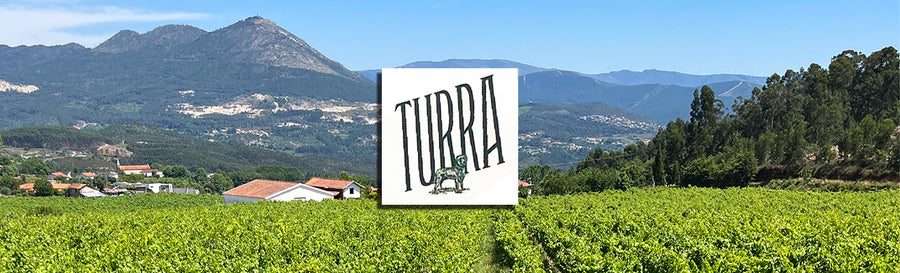
Turra is an independent Portuguese wine project based in the beautiful Basto subregion of Vinho Verde, in northern Portugal.
Created by friends Bruno Mota and Nuno Andrade, with the involvement of winemaker Constantino Ramos, the project combines a strong connection to the region with a desire to produce distinctive, expressive wines.
Its vineyards are situated around Mondim de Basto, surrounded by the dramatic mountainous landscape of northern Portugal.
Overlooking the area is Monte Farinha, one of the region's most recognisable landmarks.
Turra works with traditional Portuguese grape varieties, exploring both familiar and unconventional approaches to winemaking.
Its range includes fresh whites, expressive Vinhão reds, distinctive Pét-Nats and more complex wines such as Craft Barrica Alvarinho.
And while the project respects the region's winemaking traditions, it isn't afraid to experiment.
Turra Pét-Nat Vinhão is a particularly interesting example.
By combining one of northern Portugal's most distinctive traditional red grapes with the ancestral method of sparkling winemaking, Turra creates a wine that feels both rooted in history and refreshingly modern.
The result is lively, expressive, unconventional and unmistakably Portuguese.
One extraordinary red grape, a centuries-old sparkling method and the deeply rooted wine traditions of northern Portugal — Turra Pét-Nat Vinhão is a delicious reminder that sparkling wine doesn't have to be white or pink to be wonderfully refreshing.
Aroma: Blackberry · Raspberry · Sour Cherry · Wild Berries · Subtle Herbal Notes
Palate: Dry · Lively Red and Black Fruit · Vibrant Acidity · Natural Bubbles · Refreshing Finish
Pair with: Grilled Chouriço · Rojões à Minhota · Roast Pork · Barbecue · Grilled Sausages · Charcuterie · Roasted Mushrooms · Aged Portuguese Cheeses
Serving Temperature: 8–10°C / 46–50°F