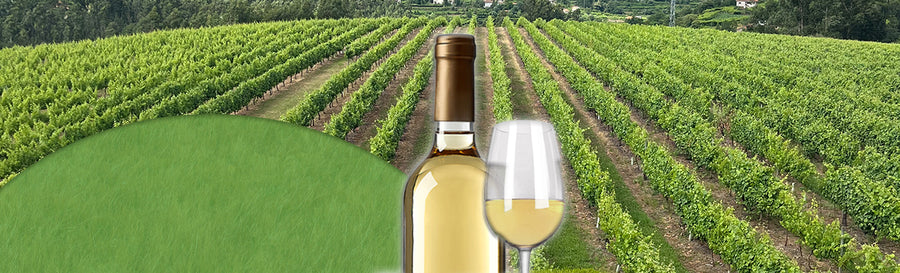
Epordouro 'Encostas do Solar' White Blend 2025
A beautifully fresh yet surprisingly textured white wine from Portugal's spectacular Douro Valley, combining vibrant citrus, delicate floral aromas and ripe orchard fruit with a wonderfully rounded finish. Made from three traditional Portuguese grape varieties, this elegant blend reveals a lighter, lesser-known side of a region famous for its powerful reds and historic Port wines.
Epordouro Encostas do Solar White Blend comes from Cima Corgo, in the heart of Portugal's Douro wine region, where dramatic vineyard-covered hillsides rise above one of Europe's most celebrated rivers.
Made from Viosinho, Gouveio and Rabigato, three indigenous Portuguese white grapes traditionally grown in the Douro, this wine brings together freshness, aromatic complexity and a lovely sense of texture.
Each grape plays an important role. Viosinho contributes delicate floral aromas and ripe fruit, Gouveio brings body and orchard fruit character, while Rabigato provides vibrant acidity and citrus-driven freshness.
In the glass, expect a bright pale lemon colour with inviting aromas of lemon, fresh apple, ripe pear and delicate white flowers, accompanied by subtle mineral notes. On the palate, it's dry, beautifully balanced and refreshing, with juicy fruit, lively acidity and a rounded, almost silky texture that carries through to a pleasant, lingering finish.
At 12.5% ABV, this is a wonderfully versatile white wine, equally enjoyable on its own or alongside seafood, grilled fish, roast chicken and traditional Portuguese dishes.
Meet the grapes behind the blend
Three indigenous Portuguese white grapes, each contributing something different, come together to create a beautifully balanced expression of the Douro Valley.
Viosinho – The Aromatics
Viosinho is one of the Douro's most interesting traditional white grape varieties, prized for its ability to produce wines with expressive aromas and elegant structure.
Typical characteristics include white flowers, citrus, peach and subtle tropical fruit, often accompanied by delicate mineral notes.
Historically, Viosinho was frequently used in white Port production, contributing aromatic complexity and quality to traditional blends.
Today, it's increasingly appreciated in dry white wines, where its fragrance and fruit character can really shine.
In Encostas do Solar, Viosinho contributes aromatic lift and an elegant fruit profile.
Gouveio – The Body and Texture
Gouveio is another traditional Portuguese white grape, widely grown in the Douro and other inland wine regions.
Across the border in Spain, it's known as Godello, a variety that has gained international recognition for producing beautifully textured, expressive white wines.
Gouveio typically offers ripe pear, apple, peach and citrus characteristics, accompanied by a fuller mouthfeel and balanced acidity.
It's particularly valued for its ability to bring structure and substance to white blends without making them feel heavy.
In this wine, Gouveio contributes rounded fruit and a lovely sense of body.
Rabigato – The Freshness
Rabigato is one of the Douro's most important traditional white grapes, particularly prized for its ability to retain naturally high acidity in the region's warm climate.
Its name translates as "cat's tail" in Portuguese, a reference traditionally associated with the shape of its grape bunches.
Typical characteristics include lemon, lime, green apple and delicate floral or mineral notes, often accompanied by a lean, refreshing structure.
Rabigato plays an especially important role in the Douro because its acidity helps balance the richness that can develop in grapes grown under the region's hot summer conditions.
In Encostas do Solar, it provides the crisp, mouthwatering freshness that brings the whole blend together.
Together, Viosinho, Gouveio and Rabigato create a wine that combines floral elegance, rounded fruit and refreshing acidity — a wonderful introduction to the white wines of the Douro.
The Douro isn't just about red wine
When most people think of the Douro Valley, they picture dramatic terraced vineyards, powerful red wines and, of course, Port.
But the region has a fascinating tradition of producing white wines too.
For centuries, indigenous white grapes such as Viosinho, Gouveio, Rabigato, Malvasia Fina and Códega do Larinho were cultivated throughout the Douro, often destined for white Port production.
Over time, winemakers began exploring their potential for producing dry white wines, discovering that the region's traditional varieties could offer an impressive combination of fruit, freshness and structure.
And here's what makes that particularly interesting.
The Douro is one of Portugal's warmest and most dramatic wine regions, with hot, dry summers that might seem better suited to powerful red wines.
But altitude, vineyard orientation, grape selection and careful winemaking can all help preserve freshness.
Varieties such as Rabigato are particularly valuable because they naturally retain acidity, while Gouveio and Viosinho contribute texture and aromatic complexity.
The result is a style of white wine that can be wonderfully refreshing while offering more body and substance than many people expect.
Encostas do Solar is a lovely example of that balance.
What makes Cima Corgo special?
The Douro wine region is traditionally divided into three subregions: Baixo Corgo, Cima Corgo and Douro Superior.
Cima Corgo occupies the central part of the Douro Valley and is particularly famous for its historic vineyards and outstanding Port production.
Compared with the wetter, more Atlantic-influenced Baixo Corgo to the west, Cima Corgo generally experiences warmer, drier conditions, allowing grapes to develop impressive concentration and flavour.
The landscape is dominated by steep hillsides, winding river valleys and the distinctive terraces that have made the Douro one of the world's most recognisable wine regions.
Much of the region's vineyard land is characterised by schist-derived soils, which can fracture and allow vine roots to explore deep into the rocky ground.
And while the Douro is famous for its reds, the region's white grape varieties can produce beautifully expressive wines, particularly when grown in sites that help preserve acidity.
Encostas do Solar captures that fascinating balance between the Douro's warm inland climate and the natural freshness of its traditional white grapes.
What makes schist soils so interesting?
One of the defining characteristics of the Douro Valley is its geology.
Unlike much of neighbouring Vinho Verde, where granite-derived soils are widespread, the Douro's historic vineyards are strongly associated with schist, a layered metamorphic rock.
Schist can fracture into thin plates, creating openings that vine roots can explore as they search for water.
This is particularly important in the Douro, where summers are often hot and dry and rainfall can be limited during the growing season.
The rocky terrain can also make vineyard cultivation challenging, requiring careful management of soil, water and erosion.
But there's an important distinction worth understanding.
Schist doesn't literally give wine the flavour of stone or minerals.
When wine lovers describe a wine as mineral, they're referring to sensory impressions that may resemble wet stone, chalk or a clean, stony freshness.
The relationship between vineyard geology and those flavours is complex and isn't simply a matter of the vines absorbing the taste of the rocks.
What schist does influence is the physical environment in which the vines grow, including drainage, rooting conditions and water availability.
It's another fascinating part of the story behind the Douro's distinctive wines.
A 15th-century manor and the story behind the name
The names of Epordouro's wines have a fascinating connection to the history of Cabêda, the village associated with the family's winemaking heritage.
The estate's wine names draw inspiration from an old manor house known as Solar dos Dragos, whose origins date back to the 15th century.
The property once belonged to the Dragos family, a noble family of winegrowers connected to the area's agricultural history.
Today, only the ruins of the manor remain, but its legacy continues through Epordouro's wines.
The Portuguese word solar refers to a manor house or ancestral family residence, while encostas means slopes or hillsides.
So Encostas do Solar can be understood as "Slopes of the Manor", a wonderfully fitting name for a wine from the dramatic hillsides of the Douro Valley.
It's a lovely example of how Portuguese wine names often preserve stories about the people, buildings and landscapes that shaped a region long before the modern winery existed.
About Epordouro
Epordouro is a family-run Portuguese winery rooted in Cabêda, in the Cima Corgo subregion of the Douro Valley.
The modern winery was established in 1998 by brothers Manuel Luís and Hermínio Morais, who wanted to revive their family's ancestral connection to winemaking.
Rather than allowing that heritage to disappear, the brothers decided to dedicate themselves to producing wines that celebrated the traditional grapes and character of the Douro.
Their range includes the Encostas do Solar, Portas do Solar and Solar dos Dragos labels, each reflecting different expressions of the region and its winemaking traditions.
The names themselves preserve the memory of the historic Solar dos Dragos manor house in Cabêda, connecting the modern family business with centuries of local wine history.
Today, Epordouro produces a diverse range of wines, from refreshing whites and elegant rosés to structured reds and traditional Port wines.
The winery also produces olive oil, another important part of the Douro's agricultural heritage.
And while the Douro is one of Portugal's most internationally recognised wine regions, Epordouro represents the smaller, independent family producers who continue to preserve its traditions.
Their Encostas do Solar White Blend is a particularly lovely introduction to that story, offering the freshness and elegance of Portugal's traditional white grapes alongside the distinctive character of the Douro Valley.
Aroma: Lemon · Fresh Apple · Ripe Pear · White Flowers · Subtle Mineral Notes
Palate: Dry · Medium-bodied · Juicy Orchard Fruit · Refreshing Acidity · Rounded Texture · Lingering Finish
Pair with: Grilled Shrimp · Clams · Seafood Rice · Grilled Sea Bass · Roast Chicken · Salt Cod · Creamy Risotto · Soft Cheeses
Serving Temperature: 9–11°C / 48–52°F