Rapazotes 'De Rua' Red Blend 2020
Rich, elegant and beautifully expressive, Rapazotes 'De Rua' is a captivating red wine from Portugal's legendary Douro Valley. Combining the floral intensity of Touriga Nacional, the silky fruit of Touriga Franca and the aromatic spice of Tinta Amarela, this carefully crafted blend offers generous dark berries, velvety tannins and a wonderfully lingering finish.
From the spectacular terraced vineyards of the Cima Corgo, in the heart of Portugal's Douro Valley, De Rua captures the character of one of the world's most extraordinary wine-growing landscapes.
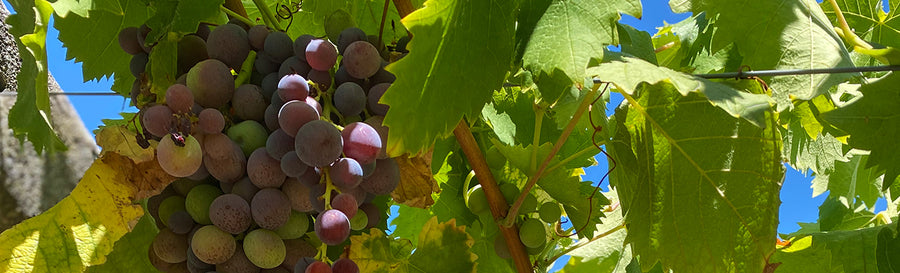
Made from three traditional Portuguese red grapes — Tinta Amarela, Touriga Franca and Touriga Nacional — this expressive wine brings together varieties that have played an important role in the Douro's winemaking heritage for generations.
But while the Douro is famous for producing powerful, concentrated red wines, De Rua demonstrates that the region is equally capable of elegance and finesse.
Each grape contributes something different.
Tinta Amarela brings fragrant spice and aromatic complexity. Touriga Franca contributes generous fruit and a beautifully smooth texture, while Touriga Nacional adds floral intensity, depth and structure.
The wine is matured in French oak, allowing its fruit, tannins and aromatic complexity to develop together.
The result is a beautifully balanced red with inviting aromas of blackberry, ripe plum, dark cherry, violet and warming spice, complemented by subtle oak-derived notes.
On the palate, expect generous dark fruit, polished tannins and a rounded, velvety texture, with enough freshness to keep the wine lively.
At 14% ABV, De Rua offers the depth and character associated with the Douro without sacrificing elegance.
And there's something particularly fascinating about how the wine is made.
Rapazotes uses traditional Douro winemaking techniques, including fermentation in granite lagares and foot-treading, connecting this modern red to centuries of Portuguese wine history.
Meet the grapes behind the blend
Three indigenous Portuguese red grapes, each with its own personality, come together to create a beautifully balanced Douro wine.
Tinta Amarela – The Spice and Aromatic Elegance
Tinta Amarela is a traditional Portuguese red grape particularly associated with the Douro and Trás-os-Montes regions.
In southern Portugal, especially Alentejo, it's more commonly known as Trincadeira.
This is a fascinating example of how the same grape can develop different regional identities.
Tinta Amarela is known for its aromatic complexity, often displaying notes of red berries, black fruit, pepper, dried herbs and subtle floral characteristics.
It can produce wines with vibrant acidity and considerable personality, although the variety can be challenging to grow.
Its relatively thin skins and compact bunches can make it susceptible to rot in humid conditions, meaning careful vineyard management is particularly important.
In the warm, relatively dry Douro Valley, the grape can achieve excellent ripeness while retaining its distinctive aromatic character.
In De Rua, Tinta Amarela contributes spice, fragrance and complexity, adding an intriguing dimension to the blend.
Touriga Franca – The Silky Fruit and Elegance
Touriga Franca is one of the Douro Valley's most important red grape varieties.
Historically associated with Port production, it also plays a significant role in the region's increasingly celebrated dry red wines.
The grape is particularly valued for its ability to produce wines with generous fruit, attractive floral aromas and relatively refined tannins.
Typical characteristics include blackberry, dark cherry, ripe plum, violet and subtle herbal notes.
Touriga Franca is generally well adapted to the Douro's warm, dry conditions.
Its ability to perform reliably in this demanding environment has made it an important variety throughout the region.
In blends, Touriga Franca often contributes fruit, balance and an appealing sense of elegance.
And that's precisely its role in De Rua.
It helps create the wine's smooth, velvety texture while providing generous dark-fruit character.
Touriga Nacional – The Structure and Depth
Touriga Nacional is one of Portugal's most celebrated indigenous red grapes.
Although it has become closely associated with the Douro, it also has an important history in the Dão region.
Today, it's grown throughout Portugal and is widely regarded as one of the country's flagship varieties.
Touriga Nacional is particularly known for its concentrated fruit, distinctive floral aromas and ability to produce wines with considerable structure.
Typical characteristics include blackcurrant, blackberry, violet, dark plum and subtle herbal notes.
Its relatively small berries and thick skins can contribute concentrated colour, flavour and tannins.
This makes it particularly valuable in blends intended to develop complexity and structure.
In De Rua, Touriga Nacional adds depth, intensity and a floral dimension that complements the softer fruit of Touriga Franca.
Together, these three varieties create a beautifully balanced combination of aromatic spice, generous fruit and elegant structure.
Why is the Douro Valley so special?
The Douro Valley is one of the world's most extraordinary wine-growing regions.
Located in northern Portugal, it follows the River Douro inland from the city of Porto towards the Spanish border.
The landscape is characterised by steep hillsides, dramatic river valleys and vineyards planted on terraces that have been carved into the mountains over generations.
And it's not simply a beautiful place to grow grapes.
The Douro is one of the world's oldest formally demarcated wine regions, with its boundaries established in 1756.
The region became internationally famous for Port, the fortified wine that has been produced and traded here for centuries.
But the Douro has also developed a remarkable reputation for dry red and white wines.
The same indigenous grape varieties historically used for Port can produce beautifully expressive unfortified wines.
And De Rua is a wonderful example.
It combines three traditional Douro grapes in a dry red wine that celebrates both the region's power and its elegance.
What makes the Cima Corgo different?
The Douro wine region is traditionally divided into three major subregions: Baixo Corgo, Cima Corgo and Douro Superior.
Each has its own climatic and geographical characteristics.
The Baixo Corgo, in the western part of the region, generally experiences greater Atlantic influence and higher rainfall.
The Douro Superior, towards the Spanish border, is typically hotter, drier and more continental.
And between them lies the Cima Corgo, the central section of the Douro Valley.
This is where Rapazotes produces De Rua.
The Cima Corgo is particularly celebrated for its high-quality vineyards and has long been associated with some of the Douro's most prestigious wines.
Its climate is generally warmer and drier than the Baixo Corgo, but less extreme than many parts of the Douro Superior.
The region's steep slopes, varying vineyard elevations and different sun exposures create a remarkable diversity of growing conditions.
And that diversity is important.
Two vineyards only a short distance apart can experience noticeably different temperatures, sunlight and ripening conditions.
This allows winemakers to work with grapes that offer different levels of concentration, freshness and aromatic complexity.
For a blend such as De Rua, these characteristics help create a wine with both depth and balance.
Why are Douro vineyards planted on terraces?
One of the most recognisable features of the Douro Valley is its extraordinary network of vineyard terraces.
Known in Portuguese as socalcos, these terraces have shaped the region's landscape for centuries.
But they weren't created simply for their beauty.
The Douro's hillsides are often extremely steep, making conventional vineyard cultivation difficult or impossible.
Terracing creates areas where vines can be planted and maintained.
Historically, many terraces were built using dry-stone walls, with enormous amounts of labour required to construct and preserve them.
Some of these structures remain an important part of the region's cultural heritage.
Modern vineyards may also use different planting arrangements, including patamares, which are wider terraces often constructed with machinery.
The choice of vineyard layout depends on slope, soil, erosion risks and practical considerations.
And the dramatic terrain influences almost every aspect of viticulture.
Steep slopes can affect sunlight exposure, drainage and the movement of water through the vineyard.
They can also make harvesting extremely labour-intensive.
It's one of the reasons Douro winegrowing is so closely associated with dedication, tradition and an extraordinary relationship between people and landscape.
Why is schist so important in the Douro?
Much of the Douro Valley's vineyard landscape is associated with schist, a metamorphic rock that forms under heat and pressure deep within the Earth's crust.
Schist often has a layered structure that can fracture along planes.
Over time, weathering and fracturing create pathways through which vine roots may grow.
And in the Douro's hot, dry climate, access to water can be particularly important.
Schist-derived soils and fractured bedrock influence how water moves through the vineyard and how deeply roots can explore the ground.
The exact conditions vary considerably between sites.
Some vineyards have shallow, rocky soils, while others have deeper weathered material.
Aspect, elevation and slope can be just as important as the underlying geology.
And there's an interesting misconception worth addressing.
When people describe a Douro wine as having a mineral or stony character, that doesn't mean the wine literally tastes of schist.
Minerals from rocks don't simply travel through the roots and appear as rock flavours in the glass.
Instead, geology influences the vine's growing environment, including water availability, root development and nutrient conditions.
Those factors can indirectly influence grape development and the resulting wine.
For De Rua, the broader schist-dominated landscape of the Douro is part of the remarkable environment in which its traditional grape varieties are grown.
Why does French oak work so well with Douro reds?
Oak ageing has long played an important role in the production of structured red wines.
And the concentrated fruit and tannins of many Douro varieties make them particularly well suited to maturation in wood.
De Rua is aged in French oak barrels, allowing the wine to develop additional complexity and a more integrated texture.
But what actually happens during oak ageing?
Oak is a porous material that allows small amounts of oxygen to interact with the wine over time.
This gradual oxygen exposure can influence the development of aromas and the way tannins are perceived.
Oak can also contribute compounds that create aromas reminiscent of vanilla, toast, baking spice or subtle wood.
The intensity depends on several factors, including the age of the barrel, its size, toast level and the duration of ageing.
Used oak barrels generally contribute less obvious wood flavour than new barrels.
This can be particularly useful when a winemaker wants to develop texture and complexity without overwhelming the grape's natural character.
Rapazotes' documented approach to De Rua includes ageing in French oak, with the producer specifying used barrels for its 2020 release.
For the 2019 vintage, The Vinho lists 15 months of oak ageing, although the exact barrel programme still needs confirmation against that vintage's technical sheet.
What matters most in the finished wine is the balance.
The oak should complement the dark fruit, floral aromas and spice of the three grape varieties rather than dominate them.
What does De Rua mean?
The Portuguese expression de rua translates literally as “of the street”.
But in everyday language, rua can evoke much more than a physical street.
It's a place of movement, social life, encounters and shared experiences.
And that makes it an appealing name for a wine intended to be enjoyed around the table.
Rapazotes presents De Rua as a wine with an irreverent attitude but an authentic connection to its origins.
Rather than suggesting something formal or intimidating, the name has a relaxed, approachable personality.
It's a lovely contrast to the grandeur of the Douro Valley.
A wine from one of the world's most dramatic wine regions, made to be shared and enjoyed rather than saved indefinitely for a special occasion.
And there's another playful connection.
The name Rapazotes comes from rapaz, the Portuguese word for boy or lad.
It gives the producer a youthful, informal identity that contrasts nicely with the region's centuries-old winemaking traditions.
Why is the Douro famous for both Port and dry red wine?
For centuries, the Douro Valley was internationally celebrated primarily for Port.
Port is a fortified wine, meaning grape spirit is added during production.
In most red Port styles, fortification stops fermentation before all the grape sugar has been converted into alcohol, leaving natural sweetness in the finished wine.
Dry Douro reds are produced differently.
Fermentation is allowed to continue until the wine is dry, without the addition of grape spirit.
This allows the traditional Douro grape varieties to express themselves in a different way.
Touriga Nacional, Touriga Franca and Tinta Amarela can contribute colour, fruit, tannin and aromatic complexity to both fortified and unfortified wines.
But in a dry red such as De Rua, the emphasis is on balancing those characteristics without Port's sweetness or fortification.
The result is a wine that can be enjoyed alongside a much wider range of savoury foods.
And it's one of the reasons the Douro has become increasingly celebrated for its dry wines.
The same extraordinary landscape that produces some of the world's most famous fortified wines is also capable of producing beautifully balanced, expressive reds.
Why is De Rua such a good food wine?
The combination of dark fruit, polished tannins and balanced acidity makes De Rua a wonderfully versatile red at the dinner table.
Its structure allows it to stand up to rich, savoury dishes, while its fruit and freshness help keep the pairing balanced.
Tannins can be particularly enjoyable alongside protein-rich foods, such as grilled or roasted meat.
The wine's acidity also helps refresh the palate between bites.
And its spice and dark-fruit characteristics complement smoky, roasted and slow-cooked flavours.
Try De Rua alongside grilled steak, roast lamb, slow-cooked beef, pork shoulder or mushroom risotto.
It's also a wonderful partner for traditional Portuguese dishes.
Posta à Mirandesa, a thick grilled beef steak from northeastern Portugal, would make an excellent pairing.
So would cabrito assado, traditional Portuguese roast kid goat, particularly when served with potatoes and herbs.
And for something a little simpler, try it with grilled chouriço, aged Portuguese cheese or a rich tomato-based pasta.
The wine's velvety texture and generous fruit make it equally enjoyable during a relaxed dinner with friends.
About Rapazotes
Rapazotes is a Portuguese wine producer based in the Douro region, with a particular focus on expressing the character of its traditional indigenous grape varieties.
The project celebrates the region's dramatic landscape, historic winemaking techniques and remarkable diversity of vineyard sites.
Its wines are produced in the Cima Corgo, one of the Douro's most celebrated subregions.
The range includes both white and red wines, from fresh expressions of indigenous white varieties to structured, oak-aged reds.
Rapazotes also produces Reserva, Grande Reserva and Colheita Selecionada wines, offering different interpretations of the Douro's traditional grape varieties.
And while the region's history is central to the project, the wines are designed to feel approachable and enjoyable.
De Rua is a particularly lovely example.
By combining Tinta Amarela, Touriga Franca and Touriga Nacional, the producer creates a wine that celebrates the Douro's distinctive red grape heritage.
Traditional winemaking techniques and French oak ageing contribute additional depth and complexity.
But the finished wine remains focused on balance, fruit and elegance.
Three traditional Douro grapes, centuries of winemaking heritage and the remarkable landscape of the Cima Corgo — Rapazotes De Rua is a beautifully expressive Portuguese red that brings together power, finesse and personality.
Aroma: Blackberry · Dark Cherry · Ripe Plum · Violet · Black Pepper · Subtle Toasted Spice
Palate: Dry · Medium to Full-bodied · Generous Dark Fruit · Velvety Tannins · Balanced Acidity · Long, Elegant Finish
Pair with: Grilled Steak · Roast Lamb · Slow-cooked Beef · Portuguese Roast Goat · Grilled Chouriço · Mushroom Risotto · Rich Pasta Dishes · Aged Portuguese Cheeses
Serving Temperature: 16–18°C / 61–64°F