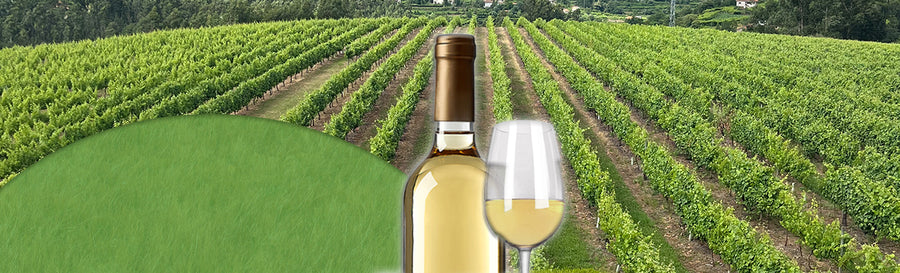
Casa Santa Eulália 'Plainas' Azal & Arinto White 2025
A wonderfully crisp and refreshing Vinho Verde from the mountainous Basto subregion of northern Portugal, bursting with zesty citrus, crunchy green apple and a delicate mineral character. Made from two traditional Portuguese grapes grown on 70-year-old vines, this is a beautiful celebration of family heritage and the freshness of Vinho Verde.
Casa Santa Eulália Plainas Azal & Arinto comes from the picturesque village of Atei, near Mondim de Basto, where the vineyards overlook the Tâmega River. Made from 50% Azal and 50% Arinto, two indigenous Portuguese white grapes renowned for their naturally refreshing acidity, this beautifully balanced wine captures the lively, vibrant character of northern Portugal.
The grapes come from 70-year-old vines planted in granite-rich soils, where the warm inland summers allow the fruit to ripen while retaining its characteristic freshness. They're harvested by hand, gently pressed and fermented in temperature-controlled stainless-steel tanks at 13–16°C. The wine then spends two months ageing on its fine lees, adding a little extra texture without losing its bright, youthful personality.
In the glass, expect a beautiful pale lemon colour with aromas of fresh lime, lemon zest, crisp green apple and subtle mineral notes. On the palate, it's light-bodied, dry and wonderfully refreshing, with lively acidity and a clean, lingering citrus finish.
At just 11.5% ABV, it's a lovely wine for a sunny afternoon, fresh seafood or simply enjoying a glass with friends.
Meet the grapes behind the blend
Two traditional Portuguese white grapes, both celebrated for their refreshing acidity, come together to create this beautifully crisp Vinho Verde.
Azal (50%) – The Crispness
Azal is one of Portugal's lesser-known indigenous white grape varieties, traditionally grown in the Vinho Verde region, particularly in its more inland subregions such as Basto.
Its defining characteristic is its remarkably high natural acidity, producing wines with vibrant green apple, lemon, lime and delicate floral notes.
And there's an interesting reason why Azal thrives in Basto.
Unlike some of Vinho Verde's earlier-ripening varieties, Azal is relatively late-ripening and benefits from the warmer summer conditions found further inland. These allow the grapes to develop flavour while retaining the acidity that makes them so distinctive.
In this blend, Azal contributes a wonderfully crisp, mouthwatering freshness.
Arinto (50%) – The Structure
Arinto is one of Portugal's most celebrated indigenous white grapes, known locally as Pedernã in Vinho Verde.
It's particularly prized for its ability to retain naturally high acidity, even in warmer growing conditions.
Typical aromas include lemon, lime, green apple and subtle mineral characteristics, often accompanied by a slightly fuller texture than Azal.
While Arinto is widely planted across Portugal, it's particularly famous in Bucelas, near Lisbon, where it produces structured, age-worthy white wines.
In this blend, Arinto contributes additional body and structure, complementing Azal's bright, energetic personality.
Together, these two grapes create a wonderful balance of Azal's crisp freshness and Arinto's citrus-driven structure, producing a wine that's vibrant, elegant and beautifully refreshing.
What makes old vines special?
One of the most interesting things about this wine is that its grapes come from vines approximately 70 years old.
That's quite remarkable when you consider that many commercial vineyards are replanted long before reaching that age.
As vines mature, their root systems can become increasingly extensive, allowing them to explore deeper layers of soil and access water and nutrients across a larger area.
Older vines may also produce naturally smaller crops, although this varies considerably depending on the variety, growing conditions and vineyard management.
For winemakers, lower yields can sometimes mean more concentrated grapes, with greater intensity of flavour.
But old vines don't automatically guarantee better wine. Their real value lies in how well they're adapted to their environment and how carefully they're maintained.
At Casa Santa Eulália, these mature Azal and Arinto vines represent decades of agricultural heritage, producing fruit that reflects the distinctive granite soils and climate of Basto.
It's a wonderful reminder that some of the most interesting wines come from vineyards that have been quietly growing for generations.
What does ageing on the lees mean?
Although Plainas is wonderfully fresh and youthful, there's a little more to its winemaking than simply fermenting the grapes and bottling the wine.
After fermentation, yeast cells naturally settle at the bottom of the tank. These are known as the lees.
Rather than removing them immediately, winemakers can choose to leave the wine in contact with the fine lees for a period of time.
As the yeast cells gradually break down, they can release compounds that contribute additional texture and complexity.
Casa Santa Eulália's Plainas spends two months ageing on its fine lees in stainless steel.
This helps give the wine a slightly more rounded mouthfeel while preserving the vibrant citrus and green apple character of Azal and Arinto.
And because the wine isn't aged in oak, there are no added vanilla or toasted wood flavours to distract from the grapes' natural freshness.
It's a lovely example of how thoughtful winemaking can add a little complexity to an otherwise beautifully straightforward, refreshing wine.
What makes Basto special?
Basto is one of the most inland subregions of Vinho Verde, where the lush green landscapes of northern Portugal begin to meet the rugged mountains of Trás-os-Montes.
Unlike the cooler, wetter coastal vineyards, Basto experiences colder winters and warmer, drier summers, allowing grapes to develop expressive fruit while retaining the refreshing acidity for which Vinho Verde is famous.
The region's predominantly granite soils, mountainous surroundings and the influence of the Tâmega River create distinctive growing conditions.
These conditions are particularly well suited to Azal, which benefits from warmer summers to achieve ripeness while maintaining its naturally high acidity.
And while Vinho Verde is internationally famous for its light, refreshing white wines, the region is capable of producing everything from delicate, aromatic blends to structured single-varietal wines and traditional reds.
Plainas is a wonderful expression of Basto's fresh, citrus-driven white wines, combining the region's distinctive climate with two of its most characteristic grape varieties.
Why is it called Plainas?
The name Plainas comes from the vineyard property surrounding Atei, where the grapes for this wine are grown.
And behind that name is a particularly lovely family story.
According to the estate's history, the Plainas property was given as a family gift in 1962, passing from one generation to the next.
Rather than simply being a commercial vineyard, Plainas became part of the family's agricultural heritage, connecting successive generations to the land overlooking the Tâmega River.
Today, the name celebrates that connection, honouring the vineyard and the people who cared for it long before the wine reached our glasses.
It's a beautiful reminder that in Portugal, wine is often as much about family and place as it is about grapes.
About Casa Santa Eulália
Casa Santa Eulália is a historic family wine estate in Atei, near Mondim de Basto, in the Basto subregion of Vinho Verde.
The estate's origins stretch back to the 17th century, when the property was associated with traditional agricultural activities, including cattle farming.
Over generations, the family developed its connection to the surrounding land, eventually placing greater emphasis on viticulture and winemaking.
Today, the winery is led by Francisco Marques Leandro, who trained under renowned Portuguese winemaker Anselmo Mendes, one of the country's most respected specialists in indigenous white grape varieties.
Francisco combines the family's long agricultural heritage with a modern approach to winemaking, focusing on expressing the distinctive character of Basto's traditional grapes.
The vineyards benefit from the region's granite-rich soils, warmer inland summers and the influence of the Tâmega River, producing wines with expressive fruit and beautifully refreshing acidity.
Casa Santa Eulália works with a range of indigenous Portuguese grape varieties, including Azal, Arinto, Alvarinho, Trajadura and Vinhão.
Their Plainas range celebrates the family's historic vineyard property, producing approachable, characterful wines that reflect the landscapes and traditions of northern Portugal.
It's a wonderful example of how a historic Portuguese estate can preserve its family heritage while continuing to evolve through thoughtful modern winemaking.
Aroma: Lime · Lemon Zest · Green Apple · Subtle Mineral Notes
Palate: Dry · Light-bodied · Crisp · Vibrant Acidity · Fresh Citrus · Clean, Lingering Finish
Pair with: Oysters · Grilled Shrimp · Clams · Grilled White Fish · Seafood Rice · Sushi · Fresh Salads · Light Goat Cheese
Serving Temperature: 8–10°C / 46–50°F