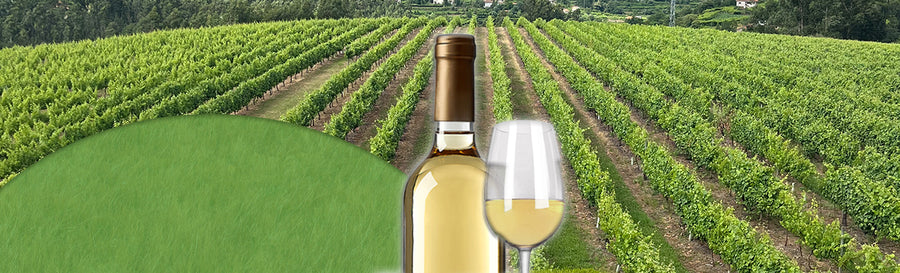
Encosta d'Arêgos 'Arêgos' Grande Escolha Avesso White 2025
A beautifully expressive and sophisticated Avesso from the dramatic hillsides of Baião, where the Vinho Verde region meets the Douro Valley. Bursting with vibrant citrus, ripe stone fruit and delicate mineral notes, this wonderfully balanced white wine showcases one of Portugal's most underrated indigenous grapes and the remarkable determination of a former banker who traded finance for winemaking.
Encosta d'Arêgos Grande Escolha Avesso comes from the picturesque hillsides above the Douro River, near the village of Arêgos in the Baião subregion of Vinho Verde.
Made from Avesso, the grape most closely associated with this corner of northern Portugal, the wine captures the wonderful balance of freshness, concentration and elegance that makes Baião's white wines so distinctive.
The vineyards occupy the steep slopes along the northern bank of the Douro River, where the lush green landscapes of Vinho Verde begin to transition into the warmer, more rugged terrain of the Douro Valley.
In the glass, expect inviting aromas of fresh citrus, ripe peach, apricot and delicate herbal notes, accompanied by a subtle mineral character. On the palate, it's dry, beautifully balanced and expressive, with juicy stone fruit, refreshing acidity and a lingering, elegant finish.
At 13% ABV, this is a more substantial expression of Vinho Verde, offering the freshness the region is famous for alongside the depth and structure that make Avesso such an exciting grape.
What makes Avesso special?
Avesso is one of Portugal's most fascinating indigenous white grape varieties, and nowhere is it more closely associated with the landscape than in Baião.
While Alvarinho and Loureiro have become internationally recognised, Avesso remains something of a hidden gem.
Traditionally grown in the warmer, more inland parts of Vinho Verde, particularly Baião, Avesso is prized for its ability to produce white wines with ripe fruit, refreshing acidity and a fuller, more rounded texture.
Typical aromas include peach, apricot, pear, citrus and subtle tropical fruit, sometimes accompanied by delicate floral or mineral notes.
Unlike Loureiro, which is celebrated for its intensely floral character, Avesso tends to be more restrained aromatically, allowing its texture, structure and elegant fruit to take centre stage.
Historically, the grape was often blended with other Vinho Verde varieties, contributing body and complexity to regional white wines.
Today, however, producers such as Encosta d'Arêgos are helping demonstrate why Avesso deserves recognition as a standalone variety.
And there's something particularly interesting about its name.
Avesso translates roughly as "inside out", "backwards" or "the reverse side" in Portuguese.
The exact origin of the grape's name isn't firmly established, but it's wonderfully appropriate for a variety that can turn people's expectations of Vinho Verde on their head.
Rather than producing only light, youthful wines, Avesso is capable of creating beautifully structured whites with genuine depth and complexity.
What does Grande Escolha mean?
Portuguese wine labels often include terms such as Escolha, Reserva and Grande Escolha.
But what do they actually mean?
Grande Escolha translates as "Great Selection", and in Portuguese wine regulations, it's a recognised quality designation associated with wines that meet additional sensory quality requirements.
Importantly, Grande Escolha doesn't automatically mean that a wine has been aged in oak barrels.
Nor does it necessarily mean that it's particularly powerful, sweet or high in alcohol.
Instead, the designation recognises a wine that meets the applicable standards for its category.
For a grape such as Avesso, which naturally combines ripe fruit with refreshing acidity and structure, the designation is particularly fitting.
Encosta d'Arêgos Grande Escolha showcases the potential of this traditional Baião variety to produce a wine that's both immediately enjoyable and sufficiently expressive to reward a little extra attention.
What is the Douro Verde?
Here's one of the most fascinating things about Encosta d'Arêgos.
Although the vineyards overlook the Douro River, the wine belongs to Vinho Verde rather than the Douro wine region.
That might sound surprising, particularly if you're familiar with the powerful red wines and famous Port wines produced further along the Douro Valley.
But the boundaries of Portugal's wine regions don't always follow the rivers themselves.
Baião occupies a particularly interesting position along the northern side of the Douro, where the Atlantic-influenced landscapes of Vinho Verde begin to transition towards the warmer continental conditions associated with the Douro Valley.
This transitional area is sometimes informally called the Douro Verde, or "Green Douro".
It's not a separate official wine appellation, but rather a wonderfully descriptive name for the meeting point of two distinctive Portuguese wine landscapes.
Here, the warmer inland climate encourages grapes such as Avesso to develop ripe fruit and concentration, while the region's natural freshness helps preserve balance and acidity.
The result can be a style of Vinho Verde that's fuller and more structured than the light, gently sparkling wines many people associate with the region.
And that's precisely what makes Encosta d'Arêgos so interesting.
Why are hillside vineyards so special?
The vineyards of Encosta d'Arêgos occupy the steep slopes overlooking the Douro River, creating both opportunities and challenges for the people who cultivate them.
Steep vineyards can offer excellent exposure to sunlight and natural drainage, helping grapes ripen while reducing the likelihood of water accumulating around their roots.
But these landscapes also make vineyard management considerably more demanding.
Working on steep slopes can be physically challenging, and some tasks that are easily mechanised on flatter land may require much more hands-on attention.
The orientation of the slopes, their elevation and the surrounding landscape can all influence the amount of sunlight and warmth the vines receive.
In Baião, these factors are particularly important because Avesso benefits from sufficient warmth to develop its characteristic ripe fruit while retaining the acidity that gives the finished wine freshness.
It's a beautiful example of how the landscape shapes the challenges and opportunities of growing grapes in northern Portugal.
What makes Baião special?
Baião is one of the most distinctive subregions of Vinho Verde, located along the northern banks of the Douro River.
Unlike the cooler, wetter coastal areas of Vinho Verde, Baião experiences warmer summers and a more continental influence, creating particularly favourable conditions for grapes that benefit from additional ripening time.
And the grape most closely associated with Baião is, of course, Avesso.
While other Vinho Verde subregions are famous for Alvarinho, Loureiro or Azal, Baião has built a reputation for producing beautifully expressive Avesso wines.
The region's hillsides, varied elevations and granite-derived soils contribute to a diverse growing environment.
Its position between Vinho Verde and the Douro also gives the region a distinctive identity, combining the freshness associated with northern Portugal's Atlantic-influenced wines with the concentration that warmer inland conditions can provide.
For wine lovers who think they already know Vinho Verde, Baião is a wonderful place to discover something different.
About Encosta d'Arêgos
Encosta d'Arêgos is a small, independent winery in the Baião subregion of Vinho Verde, perched on the steep northern slopes overlooking the Douro River.
Its name translates as "Arêgos Slope", a reference to the hillside location near Arêgos railway station.
But what makes the winery particularly memorable is the story of its founder, Álvaro Monteiro Ribeiro.
Before becoming a winemaker, Álvaro worked in banking.
Eventually, he decided to leave the financial world behind and dedicate himself to producing wine in this remarkable corner of northern Portugal.
Rather than focusing on internationally familiar grape varieties, Álvaro has embraced Avesso, the indigenous grape most closely associated with Baião.
His project celebrates both the potential of this relatively unfamiliar variety and the distinctive landscape where Vinho Verde meets the Douro.
Encosta d'Arêgos is exactly the sort of small Portuguese producer that deserves greater recognition: independent, deeply connected to its region and dedicated to showcasing grapes that many wine lovers have yet to discover.
And there's a particularly personal connection for us at The Vinho.
We first met Álvaro in the summer of 2022, beginning an adventure that involved tracking him down to discover his wines.
It was precisely the sort of experience that makes exploring Portugal's smaller wineries so rewarding.
Sometimes the most memorable wines aren't the ones you find in the biggest tasting rooms or on the most famous wine lists.
They're the ones you discover by following a winding road, meeting someone with a remarkable story and tasting a wine that completely changes your expectations.
Encosta d'Arêgos is one of those discoveries.
Aroma: Citrus · Peach · Apricot · Delicate Herbal Notes · Subtle Minerality
Palate: Dry · Medium-bodied · Juicy Stone Fruit · Refreshing Acidity · Elegant Structure · Lingering Finish
Pair with: Grilled Shrimp · Clams · Seafood Rice · Grilled Sea Bass · Roast Chicken · Creamy Risotto · Salt Cod · Soft Cheeses
Serving Temperature: 10–12°C / 50–54°F