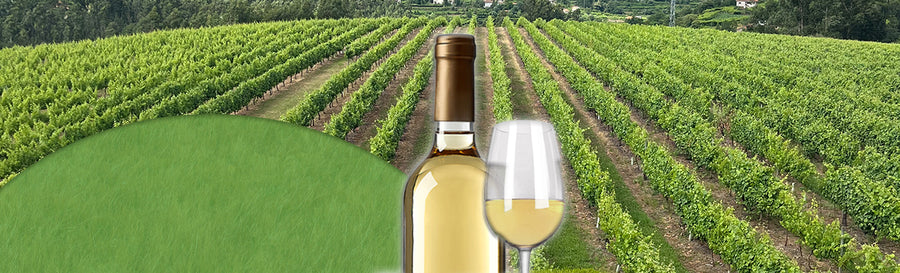
Herdade da Lisboa 'Convés' Brut Sparkling White 2023
An elegant, beautifully refreshing Portuguese sparkling wine from the sun-drenched Alentejo region, combining crisp citrus, juicy orchard fruit and delicate floral aromas with fine, persistent bubbles and a wonderfully creamy finish. Crafted using the traditional method from a fascinating blend of Portuguese and international grapes, this is a delicious reminder that exceptional sparkling wine can come from some wonderfully unexpected places.
Herdade da Lisboa Convés Sparkling White comes from Vidigueira, in southern Portugal's Alentejo wine region, where rolling vineyards, ancient olive groves and golden countryside stretch beneath the Mediterranean sun.
Alentejo is best known for its rich, generous red wines, making this elegant sparkling white something of a surprise.
Produced from Chardonnay, Arinto, Alvarinho and Baga, Convés combines four grape varieties with remarkably different personalities.
Chardonnay brings texture and rounded fruit, Arinto contributes vibrant citrus and naturally refreshing acidity, Alvarinho adds aromatic complexity, while Baga offers another dimension of freshness and structure.
The wine is produced using the traditional method, the same fundamental technique used to make Champagne, in which a second fermentation takes place inside the bottle to create its bubbles.
In the glass, expect a beautiful pale golden colour with a lively stream of fine bubbles. Delicate aromas of fresh apple, ripe pear, lemon and white-fleshed fruit lead into a beautifully balanced palate, where vibrant acidity meets a soft, creamy texture.
The finish is refreshing and elegant, making this a wonderful sparkling wine for celebrations, seafood dinners or simply enjoying with friends.
At 12.5% ABV, Convés offers a lovely combination of freshness, flavour and refinement.
Meet the grapes behind the blend
Four grapes, three white and one red, come together to create a sparkling wine that balances freshness, aromatic complexity and texture.
Chardonnay – The Texture and Elegance
Chardonnay is one of the world's most celebrated white grape varieties, originally associated with Burgundy in France.
It's also one of the principal grapes used in Champagne, where its natural acidity and ability to develop complexity during ageing make it particularly valuable.
Depending on where it's grown and how it's made, Chardonnay can produce wines ranging from crisp and citrus-driven to rich and buttery.
Typical characteristics include green apple, lemon, pear and white peach, sometimes accompanied by brioche or toasted notes after extended lees ageing.
In sparkling wine, Chardonnay is particularly prized for its balance of freshness and texture.
In Convés, it contributes rounded fruit and a lovely sense of elegance.
Arinto – The Freshness
Arinto is one of Portugal's most celebrated indigenous white grape varieties, particularly valued for its naturally high acidity.
Known as Pedernã in Vinho Verde, it's grown throughout Portugal and is especially useful in warmer wine regions.
Typical characteristics include lemon, lime, green apple and delicate mineral impressions.
And here's why it's so important in Alentejo.
As grapes ripen in warm conditions, acidity can decline. Arinto's ability to retain freshness makes it an excellent choice for wines that need a crisp, lively structure.
In Convés, Arinto contributes the vibrant citrus and refreshing acidity that help balance the wine's creamy texture.
Alvarinho – The Aromatics
Alvarinho is one of Portugal's most celebrated white grape varieties, particularly associated with the Vinho Verde region in the north.
Across the border in Galicia, Spain, it's known as Albariño.
Typical characteristics include citrus, peach, apricot and delicate floral notes, sometimes accompanied by tropical fruit.
Although Alvarinho is most famous for producing beautifully aromatic still white wines, its acidity and expressive fruit also make it an interesting component in sparkling blends.
In Convés, it adds fragrance and another layer of fruit complexity.
Baga – The Unexpected Red Grape
Baga is one of Portugal's most fascinating indigenous red grape varieties, particularly associated with the Bairrada wine region.
It's famous for producing structured, high-acid red wines with firm tannins and excellent ageing potential.
Typical red wine characteristics include sour cherry, raspberry, plum and earthy notes.
But here's the surprising part.
Baga can also produce beautiful white sparkling wines.
Although its skins are dark, the juice inside most red wine grapes is naturally clear or nearly colourless.
By pressing the grapes carefully and minimising contact between the juice and skins, winemakers can produce a pale wine from red grapes.
Baga's naturally high acidity makes it especially valuable for sparkling wine production, where freshness is essential.
In Convés, it contributes another dimension of acidity and structure.
Together, Chardonnay, Arinto, Alvarinho and Baga create a sparkling wine that combines orchard fruit, citrus freshness, aromatic elegance and a beautifully rounded texture.
How is traditional-method sparkling wine made?
One of the most fascinating things about Convés is that it's produced using the traditional method, the same fundamental technique used for Champagne.
But what does that actually mean?
The process begins with a still base wine.
After the first fermentation, the winemaker bottles the wine with yeast and a carefully measured source of fermentable sugar to initiate a second fermentation.
Because the bottle is sealed, the carbon dioxide produced during fermentation cannot escape.
Instead, it dissolves into the wine, creating the bubbles that eventually appear when the bottle is opened.
But there's another important stage.
After the second fermentation, the wine can remain in contact with the spent yeast cells, known as lees.
Over time, these yeast cells gradually break down through a process called autolysis, releasing compounds that can contribute texture and aromas reminiscent of bread dough, brioche or pastry.
The wine is eventually riddled and disgorged to remove the yeast sediment, then finished and sealed.
The result is a sparkling wine with fine bubbles, refreshing acidity and potentially greater complexity than a simple, fruit-driven sparkling style.
For Convés, Herdade da Lisboa has historically described extended maturation on the lees as part of its traditional-method approach.
It's a wonderful example of the care and patience involved in producing quality sparkling wine.
Why do fine bubbles make sparkling wine feel creamy?
Here's something particularly interesting about sparkling wine.
Bubbles don't just make a wine fizzy. They also influence how it feels in your mouth.
When carbon dioxide escapes from the wine, it creates the familiar tingling sensation we associate with sparkling wines.
But the size, persistence and behaviour of those bubbles can influence our perception of texture.
A sparkling wine with an integrated mousse can feel soft and creamy, even while remaining crisp and refreshing.
And when the wine has spent time ageing on its lees, compounds released by the yeast can contribute additional body and roundness.
This creates a fascinating contrast.
The acidity makes the wine feel lively, while the texture makes it feel smooth and elegant.
Herdade da Lisboa specifically describes Convés Sparkling White as having fine, persistent bubbles and a creamy, soft mouthfeel.
It's one of the characteristics that makes this wine particularly enjoyable alongside food.
Can white sparkling wine really be made from red grapes?
Absolutely, and it's a wonderful piece of wine knowledge to share.
Most red wine grapes have dark skins but clear or nearly colourless juice.
The red colour we associate with red wine comes primarily from pigments extracted from those skins during winemaking.
If a winemaker presses red grapes carefully and separates the juice from the skins before significant colour extraction occurs, the resulting wine can remain pale.
This technique is particularly well known in Champagne, where Pinot Noir and Meunier are regularly used to produce white sparkling wines.
A sparkling wine made entirely from dark-skinned grapes is sometimes called blanc de noirs, meaning "white from blacks".
Convés isn't a blanc de noirs because its blend also includes white grapes, but the same principle helps explain how Baga, a traditional Portuguese red grape, can be part of a white sparkling wine.
And Baga is particularly well suited to sparkling wine because of its naturally high acidity.
It's a lovely example of how a grape famous for powerful red wines can reveal a completely different personality.
Why is sparkling wine from Alentejo so surprising?
When most people think of Alentejo, they imagine hot summers, golden plains, ancient cork oak forests and generous red wines.
And understandably so.
Alentejo is one of Portugal's warmest wine regions, with abundant sunshine and long, dry summers.
These conditions are excellent for developing ripe fruit, but they can present challenges for sparkling wine production.
Why?
Because high-quality sparkling wines generally depend on grapes with good natural acidity.
As grapes ripen, their sugar levels tend to increase while acidity often declines.
For sparkling wine, winemakers therefore pay particular attention to grape variety, vineyard location and harvest timing.
Varieties such as Arinto and Baga are especially useful because they're naturally capable of retaining high acidity.
And in Vidigueira, local growing conditions influenced by the nearby Serra do Mendro can help create a distinctive balance between ripeness and freshness.
The result is a sparkling wine that offers the generosity of southern Portuguese fruit without sacrificing the lively acidity that makes bubbles so enjoyable.
Convés Sparkling White is a wonderful example of how thoughtful grape selection and winemaking can challenge our expectations about a wine region.
What makes Vidigueira special?
Vidigueira is one of Alentejo's recognised wine subregions, situated in the southern part of this vast and diverse region.
It's known for its Mediterranean climate, vineyards, olive groves and agricultural traditions.
But the landscape is more varied than the image of endless flat plains might suggest.
The nearby Serra do Mendro influences local conditions, helping shape the growing environment around Vidigueira.
Differences in elevation, vineyard exposure and temperature can all influence how grapes ripen.
And that matters particularly for white and sparkling wines.
While warm daytime temperatures encourage flavour development, cooler conditions can help preserve acidity, allowing wines to retain a refreshing character.
Vidigueira also has a fascinating winemaking history, including the traditional production of wine in large clay vessels known as talhas.
This ancient practice has roots in Roman-era winemaking and remains an important part of Alentejo's cultural heritage.
Although Convés Sparkling White is made using the modern traditional method rather than clay-vessel fermentation, it comes from a region where ancient and contemporary winemaking traditions coexist.
What does Convés mean?
The name Convés means "deck of a boat" in Portuguese.
And it has a fascinating connection to one of Portugal's most famous maritime explorers.
In 1498, Vasco da Gama reached India by sailing around the southern tip of Africa, establishing a direct maritime route between Europe and Asia.
His voyage became one of the defining events of Portugal's Age of Discovery.
Vasco da Gama was later granted the title Count of Vidigueira, connecting his legacy to the very region where Herdade da Lisboa produces its wines.
The Convés name draws inspiration from this maritime history, celebrating the connection between Vidigueira and Portugal's seafaring past.
It's a particularly fitting name for a sparkling wine made for sharing and celebrating.
And it's another reminder that Portuguese wine labels often carry stories that extend far beyond the vineyard.
Why is traditional-method sparkling wine so good with food?
Sparkling wine is often associated with celebrations, but it's also one of the most versatile styles to enjoy at the dinner table.
And much of that versatility comes from the combination of acidity, bubbles and texture.
The wine's acidity helps refresh the palate, particularly when eating rich or oily foods.
Its effervescence creates a lively sensation that can make each sip feel especially refreshing.
And the rounded texture developed through traditional-method winemaking can complement dishes with greater richness.
This makes Convés Sparkling White a particularly lovely partner for seafood, grilled fish and creamy dishes.
It's also excellent with something many people wouldn't immediately think of pairing with sparkling wine: roast suckling pig.
Known as leitão assado in Portuguese, this traditional dish combines tender meat with rich, crispy skin.
The freshness and bubbles of sparkling wine provide a wonderful contrast to that richness.
In fact, Herdade da Lisboa specifically recommends Convés Sparkling White alongside seafood, rich fish dishes and roast suckling pig.
It's a lovely reminder that sparkling wine deserves a place at the dinner table, not just at the beginning of a celebration.
About Herdade da Lisboa
Herdade da Lisboa is a family-owned wine estate in Selmes, near Vidigueira, in Portugal's Alentejo region.
Although the property has a winemaking history stretching back to the 18th century, its modern chapter began in 2011, when it was acquired by João Cardoso and his two sons.
The family has invested in developing the estate while preserving its agricultural heritage, combining modern winemaking with traditional Alentejo practices.
The property encompasses approximately 350 hectares, including around 100 hectares of vineyards and extensive olive groves.
Its vineyards are planted with both Portuguese and international grape varieties, reflecting the diversity of modern Alentejo winemaking.
Alongside Arinto, Alvarinho and Baga, the estate grows varieties such as Aragonez, Alicante Bouschet, Touriga Nacional and Syrah.
The winery also produces olive oil, another important part of Alentejo's agricultural traditions.
Sustainability plays an important role in the estate's approach, with vineyard practices designed to manage water, energy and other resources responsibly.
During our visit, we met winemaker Ricardo and commercial director Alexandre, and were particularly impressed by the freshness they achieved in a region famous for its warm climate.
We were also treated to migas, a traditional Alentejo dish made with bread, garlic and olive oil, which offered a delicious introduction to the region's food culture.
For us, Herdade da Lisboa represents one of the things we love most about Portuguese wine: family-run producers combining local history, traditional grapes and thoughtful winemaking to create wines with genuine character.
And Convés Sparkling White is a particularly beautiful expression of that philosophy, combining the warmth of Alentejo with the freshness, elegance and fine bubbles of traditional-method sparkling wine.
Aroma: Fresh Apple · Ripe Pear · Lemon · White-Fleshed Fruit · Delicate Florals
Palate: Dry · Fine, Persistent Bubbles · Crisp Citrus · Juicy Orchard Fruit · Creamy Texture · Refreshing Finish
Pair with: Oysters · Grilled Shrimp · Seafood Rice · Grilled Sea Bass · Sushi · Roast Chicken · Creamy Risotto · Portuguese Roast Suckling Pig · Soft Cheeses
Serving Temperature: 6–8°C / 43–46°F