Alvarinho as you've probably never experienced it before—a deeply textural, skin-fermented expression aged for a full year in clay amphora, showing an entirely different side of one of Portugal's most celebrated white grapes.
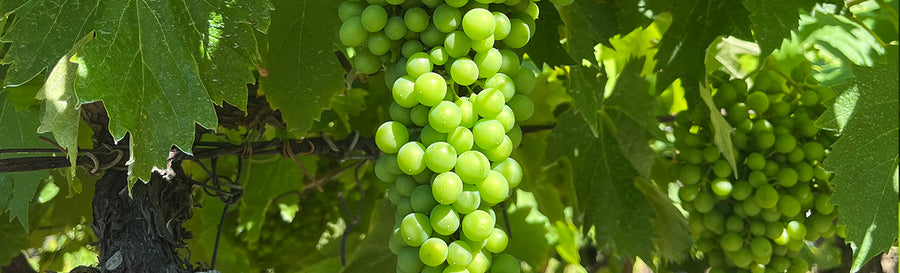
Espera Alvarinho na Ânfora is made from 100% Alvarinho, using a selection of the ripest grapes from a 13-year-old, northeast-facing vineyard in Alcobaça. The vines grow in clay-limestone soils under the influence of the Atlantic Ocean, giving Rodrigo Martins the freshness and natural acidity he needs to take Alvarinho somewhere altogether more adventurous.
The grapes are harvested by hand into small 15kg cases before undergoing natural fermentation for 21 days with both their skins and stems. But Rodrigo doesn't press the wine once fermentation is finished. Instead, it remains in stainless steel with all of the grape solids—skins and stems included—for an incredible seven months. Only then is it pressed and transferred into clay amphora, where it spends another full year ageing before bottling.
It's a fascinating approach that completely transforms our expectations of Alvarinho. The wine develops a beautiful golden colour and remarkable complexity, with dried apricot, orange peel and floral notes layered over the distinctive mineral character of the region. On the palate it's intense and textural yet still beautifully fresh, with a fine structure and a wonderfully long finish.
At 12.5% ABV and just 1.5 g/L residual sugar, it's bone dry, while its 5.9 g/L total acidity helps maintain freshness despite all that extended skin contact and ageing. This isn't a wine to serve refrigerator-cold: Rodrigo recommends 13–14°C and decanting it if possible, allowing the wine to open up and reveal its full aromatic complexity.
Why age wine in amphora?
Long before stainless-steel tanks and oak barrels existed, winemakers were fermenting and storing wine in clay vessels. Amphora winemaking stretches back thousands of years and today has been embraced again by low-intervention winemakers looking for a vessel that allows wine to develop without imparting the flavours associated with oak.
Unlike a new oak barrel, clay doesn't give the wine flavours of vanilla, toast or spice. Instead, it provides a relatively neutral environment in which the grape, texture and character of the vineyard remain at the forefront.
For this wine, that matters enormously. After seven months with its skins and stems, the Alvarinho already has considerable structure and complexity. The additional year in amphora allows those elements to integrate and evolve without covering them with oak flavours.
The result isn't simply an "orange wine" or an "amphora wine." It's an exploration of just how far Rodrigo can take Alvarinho while still preserving the freshness and minerality that make the variety so special.
Meet Alvarinho
Alvarinho is one of Portugal's most celebrated native white varieties, best known in the north of the country, particularly Monção e Melgaço in Vinho Verde. Across the border in Galicia, the same grape is known as Albariño.
It's prized for an unusual combination of intense aromatics, naturally high acidity and the ability to produce wines with real body and concentration. In a conventional Alvarinho you might expect citrus, peach, apricot and floral notes, often accompanied by a distinctive mineral or saline character.
But this wine shows you another side entirely.
Extended contact with the skins and stems takes those familiar Alvarinho characteristics and adds tannin, texture, savouriness and complexity, while ageing in amphora allows them to evolve without masking the grape itself. The dried apricot and orange-peel character Rodrigo describes is almost like a more concentrated, savoury version of Alvarinho's naturally aromatic personality.
About Espera
Espera is the project of winemaker Rodrigo Martins and Ana Leal, founded in 2014 when Rodrigo began working with tiny vineyard parcels around Alcobaça, in Portugal's Lisboa wine region. Rodrigo, an agronomic engineer with a master's degree in viticulture and oenology, had spent years consulting for wineries throughout Portugal before creating something of his own; Ana is responsible for the distinctive identity of the brand.
The vineyards sit on a plateau around 120 metres above sea level, close to Nazaré and the Atlantic Ocean. That maritime influence is hugely important: cooler conditions and high humidity, combined with predominantly clay-limestone soils, give Espera's wines their signature freshness, natural acidity, minerality and saline character.
Their approach in both vineyard and cellar is deliberately hands-off. Espera follows organic farming principles and low-intervention winemaking, avoiding unnecessary additives and allowing wines the time they need to develop rather than rushing them to market. Rodrigo uses natural fermentation; the wines are made without fining or filtration and with low levels of sulfur.
And even the name Espera has a lovely story behind it. In vineyard pruning, an espera is a secondary spur left behind to become a future fruit-bearing unit. But espera also means "wait" in Portuguese. That idea of patience became central to Rodrigo and Ana's philosophy: rather than making wine according to a predetermined timetable, they wait until each wine tells them it's ready to be shared.
And if ever there were a wine that embodied that philosophy, it's this one: 21 days fermenting on its skins, seven months resting with the entire grape, followed by another year in amphora.
Only 1,200 bottles of the 2022 Alvarinho na Ânfora were produced, making this by far the smallest-production of these four Espera wines.
Aroma: Dried Apricot · Orange Peel · White Flowers · Mineral
Palate: Bone Dry · Fresh · Textured · Fine Tannin · Savoury · Long Finish
Pair with: Grilled octopus · Roast pork · Oily fish · Mushroom dishes · Moroccan-spiced dishes · Aged cheeses