A beautifully expressive Portuguese orange wine that brings an ancient winemaking technique to the cool Atlantic vineyards of Alcobaça.
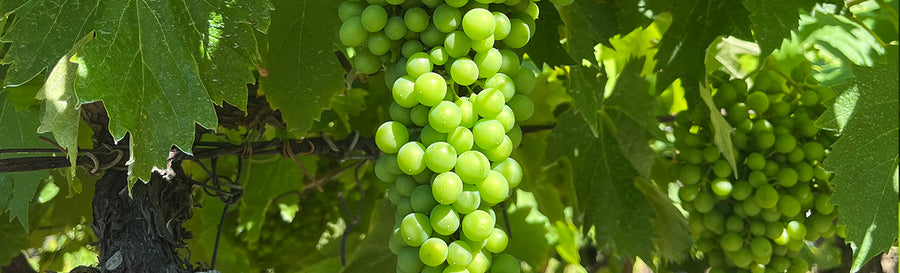
Espera Curtimenta is made from 90% Fernão Pires and 10% Alvarinho, grown in northeast-facing vineyards on clay-limestone soils close to Portugal's Atlantic coast. Rather than pressing the juice away from the skins as you would for a conventional white wine, Rodrigo Martins ferments the grapes on their skins for 14 days—a traditional Portuguese technique known as curtimenta.
That extended skin contact gives the wine its beautiful light amber colour, but also adds texture, structure and an entirely different dimension to the aromatic Fernão Pires grape. Expect apricot, orange peel and delicate floral notes, alongside a distinctive mineral character. On the palate it's intense yet remarkably fresh, with a lightly grippy, almost crunchy texture and a long, savoury finish.
After fermentation, 85% of the wine matures in stainless steel, while the remaining portion spends time in new 500-litre French oak barrels. Both are aged sur lie for six months without bâtonnage, adding subtle texture and complexity while preserving the freshness of the fruit. At just 11.6% ABV and only 1.7 g/L residual sugar, it's beautifully dry and incredibly food-friendly. Rodrigo recommends serving it at 52–55°F and even decanting it to allow all those aromatics to open up.
What exactly is Curtimenta?
Curtimenta is the traditional Portuguese practice of fermenting white grapes with their skins, rather than immediately pressing the juice away from them. Today we'd probably call the resulting style an orange or skin-contact wine, but the technique has deep roots in Portuguese winemaking.
Keeping the juice in contact with the skins extracts colour, aroma, flavour compounds and a little tannin—something we normally associate with red wine. That's why this wine has more structure and texture than a typical white, while still retaining the freshness and acidity you'd expect from its Atlantic origins.
And Fernão Pires is particularly fun here. It's one of Portugal's most widely planted indigenous white grapes and is naturally highly aromatic, often showing citrus, flowers and ripe stone fruit. Skin fermentation takes that exuberant fruit and gives it a more savoury, textured edge. The small addition of Alvarinho brings another layer of freshness and structure.
About Espera
Espera is the project of winemaker Rodrigo Martins and Ana Leal, founded in 2014 when Rodrigo began working with tiny vineyard parcels around Alcobaça, in Portugal's Lisboa wine region. Rodrigo, an agronomic engineer with a master's degree in viticulture and oenology, had spent years consulting for wineries throughout Portugal before creating something of his own; Ana is responsible for the distinctive identity of the brand.
The vineyards sit on a plateau around 120 metres above sea level, close to Nazaré and the Atlantic Ocean. That maritime influence is hugely important: cooler conditions and high humidity, combined with predominantly clay-limestone soils, give Espera's wines their signature freshness, natural acidity, minerality and saline character.
Their approach in both vineyard and cellar is deliberately hands-off. Espera follows organic farming principles and low-intervention winemaking, avoiding unnecessary additives and allowing wines the time they need to develop rather than rushing them to market. Rodrigo uses natural fermentation; the wines are made without fining or filtration and with low levels of sulfur.
And even the name Espera has a lovely story behind it. In vineyard pruning, an espera is a secondary spur left behind to become a future fruit-bearing unit. But espera also means "wait" in Portuguese. That idea of patience became central to Rodrigo and Ana's philosophy: rather than making wine according to a predetermined timetable, they wait until each wine tells them it's ready to be shared.
Only 7,000 bottles of the 2024 Curtimenta were produced.
Aroma: Apricot · Orange Peel · White Flowers · Mineral
Palate: Dry · Fresh · Textured · Light Tannin · Savoury · Long Finish
Pair with: Grilled octopus · Oily fish · Roast chicken · Pork · Mushroom dishes · Aged cheese